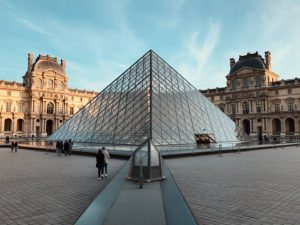
Discovering paris by night: rooftop bars, illuminated monuments and late‑night walks for an atmospheric city experience
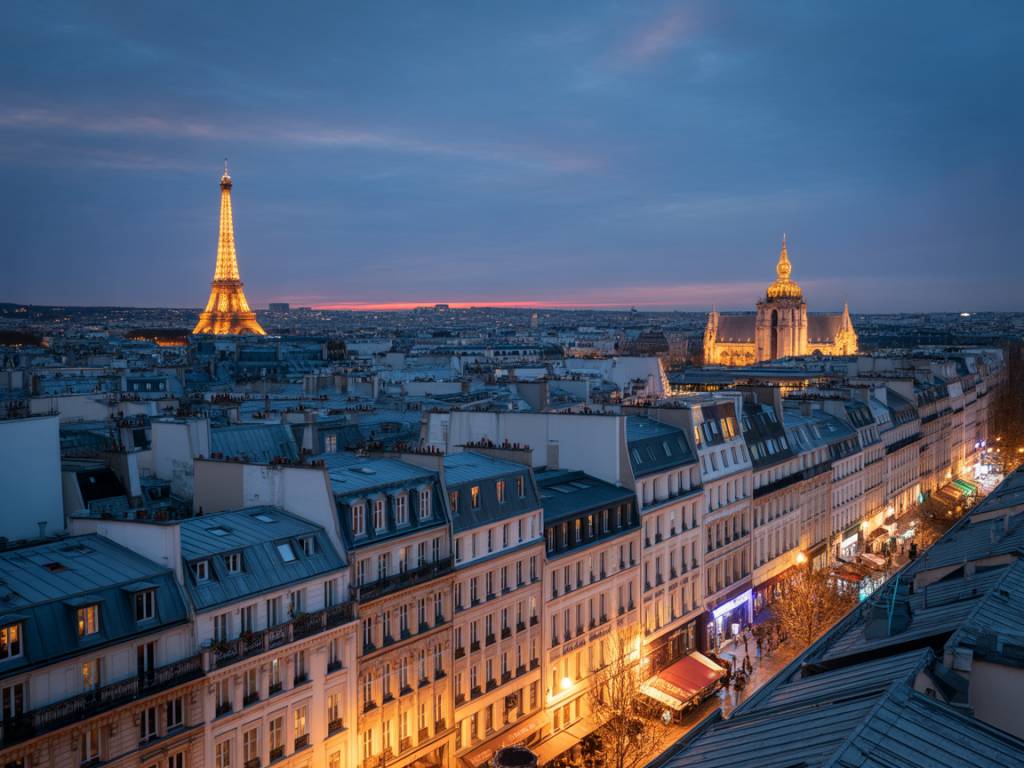
Discovering paris by night: rooftop bars, illuminated monuments and late‑night walks for an atmospheric city experience
Why Paris at night feels like a different city
Spend a full day in Paris and you’ll see queues, traffic, and a lot of people checking maps on their phones. Stay out after 10 pm, and the city changes. The office crowd disappears, most tour buses have gone back to the depot, and suddenly you can hear your footsteps along the Seine.
When I worked in a small hotel near Opéra, guests used to ask me the same question: “Is Paris safe at night?” My answer hasn’t changed much today: if you stick to lively areas, avoid a few known problem spots, and use common sense, Paris by night is not only safe, it’s often when the city is at its best.
In this guide, I’ll walk you through three of my favorite ways to experience Paris after dark:
- Rooftop bars with real views (and how not to pay 25€ for a mediocre cocktail)
- Illuminated monuments: when to go, from where, and what’s actually worth the detour
- Late‑night walks with atmosphere, not anxiety
Think of this as a realistic evening plan, not a postcard. I’ll give you options by budget, specific streets to follow, and a few backup ideas if the rooftop is full or the weather turns.
Rooftop bars: views that justify the prices
Let’s be honest: most people go to Parisian rooftops for the view, not for a life‑changing drink. Cocktails are often oversweet, and you pay 16–22€ mostly for the skyline. But some rooftops do manage to combine a good atmosphere, decent drinks, and a proper panorama.
Central and classic: Galeries Lafayette rooftop (9th arrondissement)
If you want the “wow” factor without booking anything or dressing up, start here.
Where: Galeries Lafayette Haussmann, rooftop terrace, Boulevard Haussmann (Métro Chaussée d’Antin – La Fayette or Opéra)
Why go: It’s free to access (yes, really) and open into the evening in high season. You get a front‑row view of the Opéra Garnier and the Eiffel Tower in the distance.
How it works in practice: You enter the department store, take the escalators up until you can catch the rooftop signs, then a final staircase or lift. There’s usually a bar/kiosk with snacks and drinks, but nobody forces you to buy anything.
Typical prices: 7–9€ for a glass of wine, 5–7€ for a soft drink. Not cheap, but normal for a view like this.
Best time:
- Summer: 8:30–9:30 pm for the sunset and the first sparkling of the Eiffel Tower (on the hour, for 5 minutes)
- Winter: Late afternoon for the lights; rooftop hours are shorter, check before going
Good to know: It can be very windy. Bring a light jacket, even in August. If the bar is packed, you can still walk around and take photos, nobody will chase you out.
A more local feel: Le Perchoir Ménilmontant (11th/20th)
This used to be the “secret” rooftop where I sent hotel guests who wanted something less touristy. It’s not a secret anymore, but it still has a good vibe.
Where: 14 Rue Crespin du Gast, near Métro Ménilmontant
Atmosphere: Young, mixed crowd, casual clothes are fine. Expect a queue on weekends from around 8:30 pm.
View: Less postcard, more “real” Paris rooftops with Sacré‑Cœur in the distance. At night, the city lights stretch out in every direction.
Prices:
- Cocktails: 13–15€
- Beer: around 7–8€
- Snacks / tapas: 7–14€
Best strategy: Arrive before 8 pm, especially Thursdays–Saturdays. If you don’t like queuing, go on a Sunday evening for a softer crowd and still a good atmosphere.
Safety note: The surrounding area is perfectly fine in the evening, but stick to main streets when walking back late, and use the Métro until around 12:30 am (1:30–2:00 am on Fridays/Saturdays) or a taxi/VTC after that.
Chic and central: rooftop bars around the Champs‑Élysées
If you’re looking for something more upscale, there are several hotel rooftops around the Champs‑Élysées that offer beautiful nighttime views, especially towards the Arc de Triomphe and Eiffel Tower.
Two examples to look up and compare:
- L’Oiseau Blanc (The Peninsula Paris, 16th): High‑end, dress‑up level, reservation strongly recommended. Cocktails often above 25€, but the terrace view with the Eiffel Tower almost face‑to‑face is hard to beat.
- Rooftops off Avenue George V: Several 4–5* hotels have bars with night views. Most allow non‑residents, but reservations are increasingly necessary, especially on weekends.
Who is it for? If you’re celebrating something (honeymoon, anniversary, proposal) and you accept paying more for the setting than for the drink itself, this can make sense. If your budget is tight, I’d honestly skip these and stick to Galeries Lafayette or Le Perchoir.
How to avoid rooftop disappointment
Before heading out, ask yourself three simple questions:
- What’s my maximum budget per drink? If it’s under 10€, aim for department store terraces or bars in less touristy neighborhoods.
- Do I care more about the view or the vibe? For pure view, Galeries Lafayette or a high‑end hotel. For vibe, Perchoir‑type places or canal‑side bars work better.
- Do I have a backup plan if it’s full or raining? Always have a covered bar or café saved in your map nearby.
And one last thing: you don’t have to see the Eiffel Tower from a rooftop to enjoy Paris at night. Often, the best memories come from street‑level walks after the crowds are gone.
Illuminated monuments: what’s worth it after dark
Paris doesn’t just “stay open” after dark; it transforms. Some monuments gain atmosphere at night, others lose interest once the doors close. Here’s where the nighttime light really adds something special.
Eiffel Tower: outside view vs going up
Climbing the Eiffel Tower at night sounds romantic, but you need to decide what you want more: being inside the monument, or seeing it.
Going up at night:
- Price: Around 18–29€ depending on level and stairs/lift
- Queues: Shorter than midday, but you can still wait 30–60 minutes without a pre‑booked ticket
- View: Paris lit up is beautiful, but you lose the Eiffel Tower itself in the picture, of course
My honest take: If your stay is short and your budget limited, skip going up. Enjoy the tower from outside at night instead. The sparkling lights every hour on the hour (after dusk) are visible from many points in the city and feel more magical from a bit of distance.
Best free spots to see the Eiffel Tower lights
- Trocadéro esplanade (16th): Classic view, very busy until late. Watch your bag, ignore street vendors and “friendship bracelet” scams.
- Bir‑Hakeim Bridge (15th/16th): Great combination of tower + Seine + reflections. Quieter than Trocadéro, especially on weeknights.
- From the river banks near Pont de l’Alma: Less “perfect postcard”, more atmospheric with boats passing by.
If you arrive about 5–10 minutes before the top of the hour, you’ll see the warm golden lighting switch to sparkling for 5 minutes. It’s short, but it’s still one of those tiny moments where the entire crowd goes quiet for a second.
Notre‑Dame and the Île de la Cité by night
Since the fire, you can’t visit the inside as before, but at night the cathedral is still beautifully lit, and the surrounding streets are quieter and less touristy.
Suggested route:
- Start at Place Saint‑Michel (Métro Saint‑Michel Notre‑Dame)
- Cross the bridge towards Notre‑Dame, walk around the fenced perimeter, and take a moment on the quai behind the apse for a side view of the lit‑up structure
- Continue towards Île Saint‑Louis via Pont Saint‑Louis
On a recent summer night, around 11 pm, I sat for a few minutes on the low wall along the Seine behind Notre‑Dame. A group of friends were sharing a bottle of wine, a street musician was playing softly, and for once nobody was holding a selfie stick. Ten minutes later, I was back on the Left Bank in a café. That’s the kind of simple nighttime “experience” that doesn’t cost anything and stays with you.
Arc de Triomphe and Champs‑Élysées
Visiting the top of the Arc de Triomphe at night is actually one paid monument I do recommend, especially if you haven’t gone up anywhere else.
Why it works at night:
- You get a 360° view of the city lights, including the Eiffel Tower
- The traffic circle below looks like a car ballet (from above it’s charming, from the ground it’s chaos)
- Fewer tour groups in the late evening compared to sunset
Practical info: Check current hours, but in high season it usually stays open until at least 10:30 pm, often later. Tickets are around 13–16€, and the climb is via stairs (there is a lift but limited use), so keep that in mind.
Safety note: Only access the Arc through the underground passage, never by crossing the roundabout itself. You’d be surprised how many people try.
Atmospheric late‑night walks (with backup cafés)
Walking is still the best way to understand Paris after dark. The key is choosing routes that are lively enough to feel safe, but not just clubbing zones full of drunk people and noise.
Along the Seine: Left Bank from Musée d’Orsay to Notre‑Dame
This is my classic “show someone Paris at night in 45 minutes” walk.
Start: Musée d’Orsay (Métro Solférino or RER Musée d’Orsay)
Finish: Notre‑Dame / Saint‑Michel area
Approx. time: 45 minutes at a calm pace, more if you stop often for photos.
Route in short:
- From Musée d’Orsay, go down to the river and turn left (towards the east)
- Walk along the Seine, passing the illuminated Louvre on the other side
- Continue under the bridges until Pont Neuf
- Go up to street level and cross towards Île de la Cité
- Walk along the island and finish near Notre‑Dame
Why it works: You get bridges, boats, glittering reflections, and several viewpoints on the Eiffel Tower in the distance, without detours. The quays are usually lively but not aggressive. You’ll see couples with picnics, groups of friends, and people walking home from dinner.
Backup spots if you’re tired or cold: On the Left Bank side, between Saint‑Germain and Saint‑Michel, you’ll find plenty of late‑opening cafés on Boulevard Saint‑Germain and Rue Saint‑André‑des‑Arts. Expect 6–7€ for a glass of wine, 4–5€ for a coffee at night in this area.
Montmartre after dark: charm with a few limits
Montmartre can be magical at night… and also slightly uncomfortable if you wander in the wrong direction after the last tourists leave. The trick is to stay on the “village” side and avoid drifting too far towards the lower Pigalle/Barbès area if you’re not comfortable with more chaotic streets at night.
Safe and atmospheric loop:
- Start at Place des Abbesses (Métro Abbesses). This square stays lively until late, with bistros and people on terraces.
- Walk up Rue Yvonne le Tac then Rue des Trois Frères towards Place du Tertre. These streets are lit, residential, and used by locals.
- Visit the Sacré‑Cœur forecourt for the view over the city. You’ll often find small groups sitting on the steps, musicians, and a relaxed atmosphere until around midnight.
- To go back down, take the same streets or Rue des Abbesses. Avoid dark stairways and poorly lit shortcuts if you’re alone or not familiar with the area.
What to avoid: The back of the hill towards Boulevard Rochechouart and Barbès can be more tense late at night. It’s not about panic, just common sense: if a street looks empty, poorly lit, and your instinct says “no”, listen to it and turn back toward busier areas.
Canal Saint‑Martin and Bastille: young, relaxed, not too dressy
If you like a more “local” night scene away from the monuments, Canal Saint‑Martin and the area around Bastille are good options.
Canal Saint‑Martin (10th):
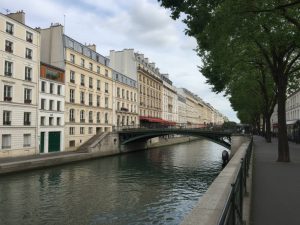
- Between République and Jaurès, the canal is lined with bars, small restaurants, and plenty of people sitting along the water in the evening, especially in summer.
- It’s lively but not luxury, you can easily have a decent glass of wine around 5–7€ and a main dish for 15–20€.
- Be aware of your belongings, especially phones laid on the table on terraces. Petty theft is the main issue, not violence.
Bastille (11th/12th):
- Rue de la Roquette and Rue de Lappe are quite animated, with many bars. Expect a younger crowd, especially on weekends.
- If you’re not into loud music or crowds, walk a few streets away towards Rue de Charonne for calmer bistros and wine bars.
Practical tips for enjoying Paris by night safely
Nighttime in a big city always requires a bit more attention. Nothing dramatic, but enough to make a difference between a relaxed evening and a stressful one.
- Transport: The Métro runs until around 12:30 am on weekdays and 1:30–2:00 am on Fridays and Saturdays. After that, use night buses (Noctilien) or taxis/VTC. Avoid walking long distances through unfamiliar areas after the last Métro unless you know the neighborhood.
- Pickpockets: They don’t clock out at 8 pm. Busy spots like Trocadéro, the Seine banks near big monuments, and crowded Métro lines remain their playground. Keep bags closed and in front of you.
- Dress code: Paris at night is more relaxed than many guidebooks suggest. Outside of luxury hotel bars and certain clubs, clean casual clothes and comfortable shoes are absolutely fine.
- Alcohol rules: Technically, drinking in public spaces is regulated, and you can be asked to move on, especially late at night or in parks. In practice, small groups with a bottle of wine on the Seine quays are usually tolerated as long as they’re discreet and not noisy.
- Toilets: A very practical point: plan ahead. Many cafés close their restrooms when they shut, and public toilets are not always pleasant. Before leaving a bar or restaurant, ask to use the bathroom even if you “don’t feel like it yet”. Your future self will thank you somewhere between Pont Neuf and Pont Marie.
Building your own Paris night routine
You don’t need a rigid itinerary to enjoy Paris at night, but having a simple pattern helps. For example:
- Option 1 (first evening): Early dinner → Galeries Lafayette rooftop → Walk to Opéra and along the Grands Boulevards
- Option 2 (romantic): Seine walk from Musée d’Orsay → Eiffel Tower lights from Bir‑Hakeim → Taxi or Métro back
- Option 3 (more local): Aperitif near Canal Saint‑Martin → Late‑night walk or drink in Bastille
Try to mix one “view” moment (rooftop or illuminated monument) with one simple neighborhood walk. You’ll see the postcards and the city where people actually live.
And if one night you just end up in a random café watching the waiter chat with regulars while the dishwasher hums in the background, that also counts as discovering Paris by night. Often, those are the moments that feel the most real.