Exploring montmartre beyond the clichés: artists’ squares, secret streets and views that still feel authentic
Exploring montmartre beyond the clichés: artists’ squares, secret streets and views that still feel authentic
Why Montmartre Is Not “Overrated” If You Know Where to Walk
Montmartre has a reputation problem. Ask around and you’ll hear the same thing: it’s “too touristy”, “all selfie sticks and caricatures”, “nothing authentic left”. I understand why. If your only contact with the hill is rushing up to Sacré-Cœur, cutting across Place du Tertre and buying a magnet on Rue de Steinkerque, you’ll probably leave disappointed.
But that’s just one face of Montmartre – the most crowded 15%. Step a few streets aside and you still find a neighborhood where people haul groceries up steep staircases, where kids play football on tiny squares, where locals argue politics at the bar before catching line 12.
In this guide, I’ll take you through Montmartre beyond the clichés: which artists’ spots still feel alive, the backstreets where groups rarely wander, and the viewpoints that are beautiful without feeling like an Instagram battlefield. With each place, I’ll answer the questions I get most from visitors: is it worth it, when to go, how crowded, what budget, and what to do if Plan A is packed.
When To Visit Montmartre (If You Don’t Like Feeling Herded)
Timetable first, because in Montmartre, the hour you visit matters almost as much as where you go.
- Early morning (before 9:30 am): Best for quiet streets, locals going to work, and photos without crowds. Bakeries smell like real life, not souvenir candles.
- Late afternoon (around 16:00–18:30): Good compromise: more people, but softer light and a bit more atmosphere. Ideal for a pre-dinner stroll.
- Evening (after 21:00): Calm again in the upper part of the hill. Couples, neighbors walking dogs. Pigalle and Boulevard de Clichy stay lively, but that’s another world.
- Avoid if possible: Saturdays and Sundays from 11:00 to 17:00 around Sacré-Cœur and Place du Tertre. You can still enjoy Montmartre then, but you’ll need to stick to the “secret” streets more aggressively.
Tip: If you only have one slot, choose early morning on a weekday. Take the metro to Abbesses around 8:00–8:30, grab a coffee and croissant, and start your walk while the hill is waking up.
Getting There (And Where To Start If You Hate Climbing)
Montmartre is a hill. On the map, it looks small. In real life, your legs will disagree. Here’s how to arrive depending on your energy level.
- Best “local” arrival: Abbesses (line 12)
One of the deepest metro stations in Paris. Take the elevator unless you genuinely want to climb the 200+ steps. When you exit, you land on Place des Abbesses: kids, carousel, locals crossing the square in a hurry. Great starting point for a more authentic loop.
- Easy arrival for Sacré-Cœur view: Anvers (line 2)
You’ll walk up Rue de Steinkerque with its endless souvenir shops – not very charming, but fast. Good if you’re with someone with reduced mobility or a stroller (there’s a funicular up the hill, metro ticket valid).
- Quieter northern access: Lamarck–Caulaincourt (line 12)
Arrive almost at the top, in a mainly residential area. Staircases, trees, less noise. Ideal starting point if you want to avoid the crowd from the beginning and work your way down.
If you hate climbing: Come up by metro to Lamarck–Caulaincourt, explore the top of the hill, then go down slowly towards Abbesses or Anvers. Your knees will complain less than your lungs.
Artists’ Squares: Place du Tertre… And Its Alternatives
Let’s start with the obvious: Place du Tertre, the “artists’ square” next to Sacré-Cœur. Is it authentic? Yes and no.
- What to expect:
Dozens of easels, portrait artists calling out to you, tightly packed restaurant terraces, menus in five languages with identical onion soup and fondue. A lot of talent, and a lot of commercial shortcuts.
- Is it worth it?
Yes, for a quick look. The square still has charm if you don’t expect a 1900s bohemian atelier. Walk across, take in the atmosphere, then move on. Spending your evening here is rarely worth the inflated prices.
- How much for a portrait?
It varies, but count €40–€80 per person for a decent quick sketch, sometimes more for color portraits. Always ask the price clearly before sitting down. If they avoid answering, go to the next artist – there are many.
Now for the alternatives that still feel lived-in:
- Rue des Trois Frères & Rue Yvonne le Tac
Five minutes down from Place du Tertre, this area has small independent shops and cafés where you’ll actually hear French. Not “secret”, but much less aggressive in terms of sales tactics. Good for a glass of wine or a snack.
- Rue Gabrielle
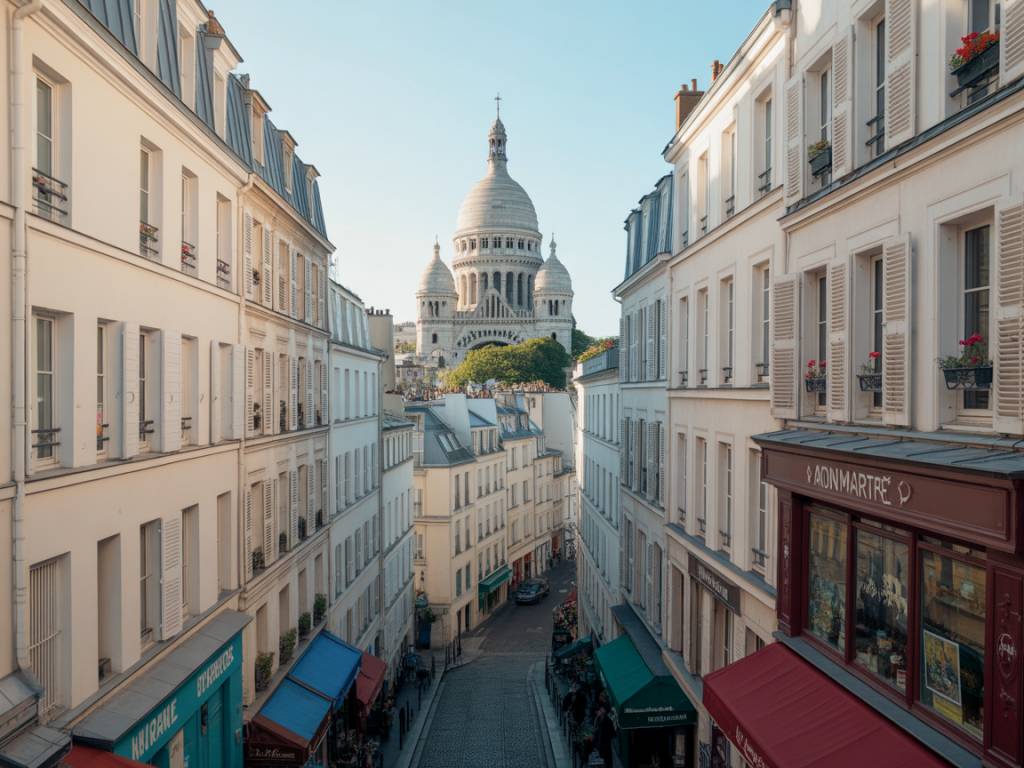
Just below Sacré-Cœur, a sloping street with pastel facades and fewer crowds. Some tiny terraces with views toward the city. Prices are still Montmartre-high, but the experience is softer than right on the main square.
- Place Emile Goudeau
A small square behind the Bateau-Lavoir (historic artists’ building). Benches, a tree, a couple of cafés. I once sat there at 10:00 on a Tuesday and watched a group of art students sketching the façades while a delivery truck tried – and failed – to squeeze through the corner. It felt more like a village than a Disney set.
Secret Streets And Staircases That Still Feel Local
“Secret” is relative. In Montmartre, if you can find it on Google Maps, you won’t be alone. But some streets and stairs are still surprisingly calm, especially outside peak weekend hours.
- Rue de l’Abreuvoir & Place Dalida
This curved street with its ivy-covered houses and cobblestones is one of the most photographed in the area. It’s not deserted, but come early morning or at dinner time and you’ll mostly meet dog walkers and neighbors. At Place Dalida (with the bronze bust), you get a classic view down Rue de l’Abreuvoir with Sacré-Cœur peeking above the roofs.
- Rue Cortot & Musée de Montmartre Garden
Rue Cortot is narrow, quiet, almost rural in mood. At number 12–14, the Musée de Montmartre is often skipped by rushed visitors. Inside, you’ll find a small but well-done museum and especially a beautiful garden overlooking the last Montmartre vineyard. On a sunny weekday afternoon, I counted more roses than humans.
- Rue des Saules & the Vineyard
Walk down Rue des Saules and you’ll suddenly see rows of vines leaning over the slope: the Clos Montmartre. It’s not the best wine you’ll ever taste (far from it), but it’s an unexpected patch of countryside in the middle of Paris. Look out for the little information panels on the fence.
- Passage des Abbesses & Rue Androuet
From Place des Abbesses, slip into the side streets rather than following the big roads. The small Passage des Abbesses and [parts of] Rue Androuet give you a nice mix of murals, small galleries and daily life.
- The staircases around Lamarck–Caulaincourt
Above the Lamarck–Caulaincourt metro, the staircases fan out in different directions (Rue Saint-Vincent, Rue du Chevalier-de-la-Barre…). This is where you feel the hill the most. You’ll cross people carrying shopping bags, tired preschoolers, and sometimes a musician using the acoustics to practice.
Tip: If a street is completely empty in the middle of a sunny Saturday, ask yourself why. In Montmartre, totally empty + totally isolated can simply mean “nothing to see” – or occasionally “good spot for pickpockets”. Stay in streets that are calm but not abandoned.
Views That Aren’t Just The Sacré-Cœur Stairs
Yes, the view from the steps of Sacré-Cœur is famous for a reason. But so are the crowds, beer vendors and bluetooth speakers. If you want a view that still feels like a viewpoint and not a festival, try these alternatives.
- Sacré-Cœur Dome (inside the basilica)
If you’re fine with stairs, climb up to the dome rather than sitting on the steps. There’s an entrance fee (around €8–€10) and about 300 steps, but the view is 360° and far less crowded. You also escape the noise of the square below.
- Square Louise-Michel, halfway up
Most people hurry from bottom to top. Stop halfway in the sloping park, sit on a side bench, and you get almost the same skyline view with fewer people in your frame. Early morning, you’ll mostly share it with joggers.
- Parc de la Turlure
Behind Sacré-Cœur (access from Rue du Chevalier-de-la-Barre or Rue Foyatier), this small, terraced park faces north with open sky and views toward the suburbs. There are usually more teenagers doing skateboard tricks than tourists. It’s not the classic postcard, but it feels like the “backstage” of the basilica.
- Montmartre Cemetery bridge (Rue Caulaincourt)
From the bridge above the Cimetière de Montmartre, you get a perspective over the tombs, trees and neighboring buildings with metro trains passing by underneath. It’s not a skyline panorama, but it’s a very “Parisian” view that photographers love.
Budget tip: All these viewpoints are free except the Sacré-Cœur dome. Save the money you’d spend in a tourist bar on the steps and invest it in a drink with a decent view instead.
Eating And Drinking Without Falling Into A Tourist Trap
Can you eat well in Montmartre without overpaying for defrosted gratin dauphinois? Yes – if you avoid the obvious traps.
Zones to treat with caution for meals:
- Around Place du Tertre and immediately surrounding streets.
- Rue de Steinkerque (between Anvers and the stairs up).
- Directly opposite Sacré-Cœur on Rue du Chevalier-de-la-Barre and Rue Azais.
Common signs of a place you might want to skip:
- Huge laminated menus with flags of 8 countries.
- “Entree + Plat + Dessert” combo at an unrealistically low price in the most touristy streets.
- Staff literally stepping into your path to drag you in.
Streets where you’re more likely to find decent options:
- Rue des Abbesses
Full of cafés, bistros and wine bars used by locals. Prices are not cheap (you’re still in the 18th), but quality is generally better, and service more relaxed. Good spot for a late lunch or early dinner after your walk.
- Rue Lepic
Runs from near Blanche up into Montmartre. Mix of food shops, bakeries, and restaurants. I often stop there for takeaway pastries or a quick coffee at the counter.
- Rue des Trois Frères
As mentioned earlier, a nice mid-way street between touristy and local. A few modern bistros and friendly bars where you can sit with a glass and people-watch without feeling hunted.
Realistic budgets in Montmartre (per person):
- Coffee at the counter: €2–€3
- Coffee seated on a terrace: €3–€5 (sometimes more next to Sacré-Cœur)
- Glass of wine: €5–€8 in a non-touristy bar
- Simple lunch (plat du jour + drink): €18–€25
- Dinner at a bistro with starter + main or main + dessert + wine: €30–€45
Tip: If your budget is tight, grab a takeaway sandwich or quiche from a boulangerie on Rue Lepic or Rue des Abbesses, then picnic on a bench in one of the small squares (Square Jehan Rictus, Square Suzanne-Buisson, Parc de la Turlure)… just avoid benches directly facing Sacré-Cœur if you don’t like being interrupted every two minutes by salespeople.
Is Montmartre Safe? What To Watch Out For
Montmartre is generally safe, but it has the usual problems of any very touristy area in a big city.
Typical issues:
- Pickpockets: Particularly around the Sacré-Cœur stairs, the funicular, and in crowded metro lines 2 and 12. Keep your phone and wallet in a zipped pocket or bag worn in front.
- Bracelet scam on the stairs: Someone grabs your wrist to “offer” you a friendship bracelet, then demands money. Just say a firm “non”, don’t stop walking, and don’t let them touch your wrist.
- Overpriced drinks and hidden charges: Always check the menu (including the price for terrace seating) before ordering anything near the main tourist choke-points.
In the smaller residential streets higher up, the atmosphere is usually calm, even at night. I’ve walked there alone many times around 22:30 without problems, crossing mostly neighbors and people headed home from dinner.
Basic rules that work well here:
- Stay in lit, lived-in streets at night; avoid cutting through empty alleys just because the map says it’s shorter.
- Don’t flash expensive cameras or watches when you’re packed into a crowd watching the sunset.
- On the metro, especially line 2, avoid standing right by the doors with your phone in your hand; snatch-and-run theft is common.
A 3-Hour Walk To Explore Montmartre Beyond The Clichés
Here’s a realistic circuit I suggest to friends when they want to experience Montmartre’s “real” side without ignoring the classics. You can do it in around 3 hours at a calm pace, not counting museum visits or long café stops.
- Start: Abbesses (line 12)
Exit the metro, take a look at the Wallace fountain and the “I Love You Wall” in Square Jehan Rictus. Quick but charming.
- Climb via Rue Yvonne le Tac & Rue des Trois Frères
Walk up gently, stop for a takeaway coffee if you need fuel. You’ll already feel the difference with the more direct tourist flow from Anvers.
- Join Rue Gabrielle, then cut up toward Sacré-Cœur
Approach the basilica from the side, not from the massive staircase. Visit the interior if you wish (it’s free), then decide whether you want to climb the dome.
- Cross behind Sacré-Cœur to Parc de la Turlure
Enjoy a short pause there. It’s usually much quieter than the front square, especially on weekdays.
- Head down Rue du Chevalier-de-la-Barre, then across to Rue de l’Abreuvoir & Place Dalida
Take your time on Rue de l’Abreuvoir – quick photos are fine, but also look at the details: nameplates, doorbells, the slope of the street.
- Walk along Rue Cortot and stop at Musée de Montmartre (optional)
If you like art and history and have the budget (around €15), go in and especially visit the garden. If not, just continue along Rue Cortot, enjoying the quiet.
- Descend via Rue des Saules to the Vineyard
Look at the Clos Montmartre from the fence. Read the panels, take a couple of photos, and imagine the harvest festival in October when the whole area smells like new wine and grilled sausages.
- Reach Lamarck–Caulaincourt, then loop back down toward Rue Lepic or Rue des Abbesses
Use the staircases or streets depending on your legs. Finish with a drink or light meal on Rue des Abbesses or Rue Lepic before heading back to the metro.
With this route, you’ll still see Sacré-Cœur and catch a bit of Place du Tertre if you want to, but most of your time will be spent in streets and squares where people actually live. And that’s when Montmartre feels less like a cliché and more like a stubborn little hill village that refuses to completely become a theme park.