


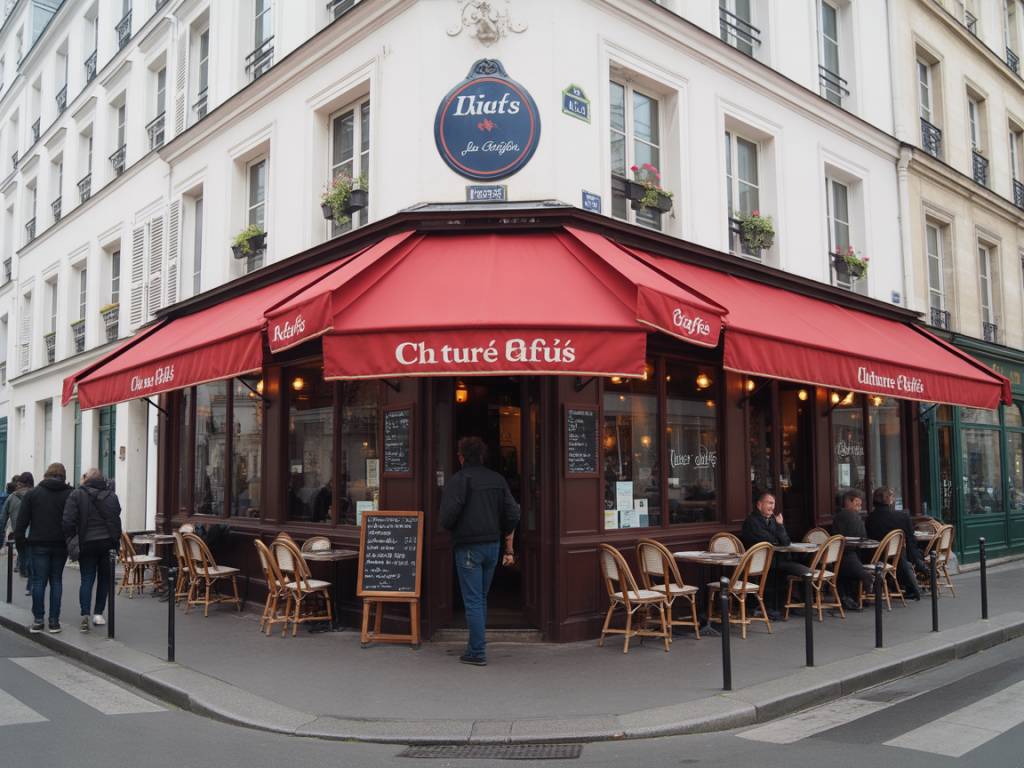
If you’re coming to Paris hoping to “live like a local”, you’ll probably end up in at least one café where the menu is in six languages, the waiter switches to English before you open your mouth, and the bill makes you feel slightly dizzy. It happens to everyone.
This guide is here to avoid exactly that.
I’ve lived in Paris for years and I spend more time than I’d admit in cafés, mostly in very unglamorous circumstances: writing on my laptop, waiting between two appointments, or hiding from the rain with a cheap espresso. Below, you’ll find the places and habits that help you stay out of the tourist bubble and inside the real, everyday café life of the city.
What “non-touristy café” really means in Paris
Let’s set expectations. “Non-touristy” in Paris doesn’t always mean quiet, cheap, or undiscovered. It often means:
-
Locals outnumber tourists, especially at off-hours.
-
Prices are reasonable compared to the neighborhood.
-
The café has an actual function in local life: people read the paper, meet their colleagues, play the lottery, watch football, argue about politics.
-
The staff doesn’t try to “perform Frenchness” for you. They just do their job.
Some of these places are a bit rough around the edges. Don’t expect polished Instagram design everywhere. But that’s part of the charm — and why you’ll never feel like you’re sitting in a movie set.
How to spot an authentic café (before you sit down)
Here’s how I quickly scan a café when I’m in a new area. This saves both money and frustration.
-
Check who’s on the terrace. If everyone is speaking English or taking photos of their croissant, move on. A mix of older Parisians, office workers, and people clearly on their way somewhere is a good sign.
-
Look at the prices posted outside. By law, menus must be displayed. Focus on the “espresso” (often written “café”) and “demi” (25 cl beer). In central areas, a local-oriented spot will usually have:
-
Espresso: around 1.20–1.60€ at the counter, 2–2.60€ at the table.
-
Demi: around 3.50–5€ depending on the neighborhood.
If the demi is 8–10€ and you’re not on the Champs-Élysées, that’s tourist pricing.
-
-
Table setup tells you the target. Fabric tablecloths, fancy folded napkins, big laminated multilingual menus = restaurant for visitors. Simple metal tables, paper placemats at most, chalkboard menu of the day in French = everyday café-brasserie.
-
Listen for the coffee grinder. If you hear beans grinding and see a real espresso machine in use, good. If coffee comes from a pod machine in a “fake old” place, it’s usually style over substance.
-
Bar counter etiquette. A few regulars drinking coffee or wine at the counter in the morning or early evening is a very good sign. This is where the real life of the café happens.
Neighborhoods with the right café atmosphere
Some areas of Paris make it easier to find authentic cafés than others. If you stay or wander here, you’ll have good options within a 5–10 minute walk.
-
Eastern Paris (11th, 10th, 19th, 20th)
Belleville, Oberkampf, Canal Saint-Martin, Ménilmontant and Jourdain are full of everyday cafés, from old-school zinc counters to newer “neo-bistro” spots. You’ll meet students, young families, and long-time residents. -
Latin Quarter behind the postcard streets (5th)
Avoid the tourist traps around rue de la Huchette and Place Saint-Michel. Go a bit further toward the Panthéon, rue Mouffetard’s upper part, or around rue Monge: more locals, fewer menus in English. -
South Pigalle & Nouvelle Athènes (9th)
Step uphill from Boulevard de Clichy into the calmer streets around Notre-Dame-de-Lorette and you’ll find honest cafés where people actually live and work, not just party. -
Upper Marais & République (3rd, 11th, 10th)
The heart of the lower Marais is quite gentrified and international, but go closer to République and towards Temple for a more mixed crowd and solid café choices.
Now, let’s get specific with addresses and what to expect once you sit down.
Cafés where you’ll blend in (by neighborhood)
The places below are not “hidden secrets” — Parisians hate that phrase anyway — but they are spots where I’ve personally felt like a regular, even when arriving with a suitcase or a laptop.
Near the Latin Quarter and the Panthéon
Café de la Nouvelle Mairie – 19 Rue des Fossés Saint-Jacques, 75005
Nearest metro: Luxembourg (RER B)
Atmosphere: Quiet, intellectual, very 5th arrondissement.
I’ve lost count of the number of times I’ve met someone here for a coffee “between two classes” or appointments at the nearby universities. Think professors with notebooks, students reading, neighbors stopping by for a glass of wine.
-
Budget: Espresso around 2–2.40€; glass of natural wine from 5–7€; simple lunch plates from about 15–20€.
-
Best time to go: Late morning on weekdays for a calm coffee, or early evening for a drink at the bar inside.
-
Why you won’t feel like a tourist: Staff is friendly but not pushy, no one hovers with the bill, and you’ll mostly hear French conversations about work, research or local gossip.
-
If you have an extra hour: Walk two minutes up to the Panthéon, or cross the street into the Luxembourg Gardens for a slow lap around the pond.
Le Rostand – 6 Place Edmond Rostand, 75006
Nearest metro: Luxembourg (RER B)
Atmosphere: Classic Parisian, mix of locals and a few savvy visitors.
Overlooking the Luxembourg Gardens, this should be a pure tourist trap — but it isn’t. Yes, prices are higher than in the suburbs, but you pay for the location and the terrace under the trees. Early in the morning, it’s very local: joggers, parents after school drop-off, retirees with their newspaper.
-
Budget: Café crème around 4–5€; pastries 3–5€; breakfast formulas from 10–15€.
-
Tip: Come before 10:00 to avoid the brunch crowd and enjoy the quieter, everyday rhythm.
-
Extra hour idea: Cross into the gardens, sit on a green chair and watch the kids pushing their sailboats on the basin.
Everyday cafés in Eastern Paris
La Fontaine de Belleville – 31-33 Rue Juliette Dodu, 75010
Nearest metro: Colonel Fabien
Atmosphere: Lively, neighborhood-y, with very good coffee.
This is where I often send friends who want “a real Paris café” without sacrificing coffee quality. It looks like a classic corner café from the outside, but they take their beans seriously, and the atmosphere is very Belleville: families, freelancers, local musicians, mixed ages.
-
Budget: Espresso around 2€; filter coffee around 3.50€; croque-monsieur, charcuterie and cheese plates 8–15€.
-
Best time: Weekend mornings for that relaxed local brunch vibe without full-on Instagram chaos; weekday afternoons if you need to work a bit.
-
Insider note: It gets loud in the evening when the apéro crowd arrives. Great if you want atmosphere, less great if you need to think.
-
Around the corner: Walk 10 minutes to the Canal Saint-Martin to sit by the water.
Aux Folies – 8 Rue de Belleville, 75020
Nearest metro: Belleville
Atmosphere: No-frills, noisy, 100% everyday Belleville.
Aux Folies is where you go when you’re tired of curated, minimalist spaces and want the opposite. Metal chairs, aging neon, a terrace that spills onto the sidewalk, people of all ages and backgrounds. I once spent an hour here listening to two older regulars dissecting the local elections with the bartender as referee.
-
Budget: Very reasonable. Expect espresso under 2€, demi beer around 3.50–4€.
-
Best time: Late afternoon or early evening before it gets packed. Morning is interesting too if you like watching the neighborhood wake up.
-
Why it feels authentic: This is a real gathering spot for the area. You’ll see students, lifelong Belleville residents, construction workers, and a few lost tourists who usually stay quiet and just observe.
-
If you stay around: Walk uphill on rue de Belleville; at the top, Parc de Belleville has one of the best free views of Paris.
Le Saint-Sauveur (bar-café) – 11 Rue des Panoyaux, 75020
Nearest metro: Ménilmontant
Atmosphere: Indie, lively at night, calm in the late afternoon.
Le Saint-Sauveur is more bar than café, but in the late afternoon it works perfectly for a beer or a coffee while you watch Oberkampf/Ménilmontant life go by. Expect music, stickers on the walls, and a very non-touristy crowd.
-
Budget: Demi beer often at happy hour prices around 3–4€; coffee basic but acceptable.
-
Good to know: Gets crowded and noisy after 20:00, with DJs on some nights. Come earlier if you’re just here for the atmosphere and a drink.
-
Nearby walk: Wander up rue de Ménilmontant and explore the small streets; you’ll pass several other cafés and tiny restaurants full of locals.
Upper Marais & République area
Café Charlot – 38 Rue de Bretagne, 75003
Nearest metro: Filles du Calvaire
Atmosphere: Chic but relaxed, a mix of locals and fashion people.
Café Charlot is not “cheap” and not a secret, but it’s one of the rare places in the Marais where I still feel like I can sit as a solo Parisian with a notebook and not be rushed. The terrace across from the Enfants Rouges market is perfect for people-watching.
-
Budget: Coffee around 3–4€; glass of wine 6–8€; salads and burgers 15–22€.
-
Best time: Weekdays between breakfast and lunch (10:00–12:00) or mid-afternoon. Evenings are busier and more “scene”.
-
Why it still works: Despite the location, it hasn’t turned into a pure tourist magnet. Lots of neighborhood regulars at set times of day.
-
If you have time: Explore Marché des Enfants Rouges just across the street for food stalls and a different kind of local atmosphere.
Chez Prune – 36 Rue Beaurepaire, 75010
Nearest metro: Jacques Bonsergent or République
Atmosphere: Classic Canal Saint-Martin spot, always a bit busy.
Yes, it’s known. Yes, it can be crowded. But sit at the bar with a coffee in the morning and you’ll be surrounded by people starting their workday, reading, or quietly recovering from the night before. The terrace is right on the canal, which makes it ideal for watching Paris glide past.
-
Budget: Coffee and drinks in the central Paris average; expect to pay around 3€+ for coffee at the table.
-
Tip: Avoid Sunday brunch if you hate queues. Go Monday or Tuesday morning instead, when it’s much more local.
-
Extra hour idea: Walk along the Canal Saint-Martin direction Jaurès; stop wherever you find another café that feels right.
South Pigalle & around
Le Sans Souci – 65 Rue Jean-Baptiste Pigalle, 75009
Nearest metro: Pigalle
Atmosphere: Slightly scruffy, bohemian, very SoPi.
I started coming here when I worked nearby in a small hotel. Staff from other businesses around drop in for a quick coffee, and in the evening it becomes a favorite of the local creative crowd. You’ll see everything from young couples to older regulars who clearly own their seats at the bar.
-
Budget: Standard central Paris pricing; espresso at the bar is still reasonable, drinks go up in the evening.
-
Best time: Late morning or early afternoon for a calm break. Nights are lively.
-
Nearby walk: Head up to rue des Martyrs, one of the best food streets in Paris, and peek into the bakeries and cheese shops.
Le Paprika – 24 Rue de Bruxelles, 75009
Nearest metro: Place de Clichy
Atmosphere: Quiet, neighborhoody, slightly hidden.
This small café near Place de Clichy doesn’t stand out at first glance, and that’s exactly why I like it. It’s where you see local shopkeepers on break, parents with strollers, and the occasional solo worker with a laptop trying to catch some Wi-Fi.
-
Budget: More affordable than the big brasseries on Place de Clichy itself; check the menu outside.
-
Tip: Good spot if you’re staying in one of the many mid-range hotels nearby and you want to avoid the overlit chains.
How to order like a local (and not feel awkward)
You can be in the most authentic café in Paris and still feel like a tourist if you don’t know what or how to order. A few simple rules help a lot.
-
At the counter is cheaper. In many cafés, coffee at the bar counter is significantly cheaper than at a table. If you only want a quick espresso, stand at the bar, order “Un café, s’il vous plaît”, drink it, pay, and leave. Total time: 3–5 minutes.
-
Basic vocabulary:
-
Un café = a small espresso.
-
Un allongé = a “long” coffee, closer to an Americano.
-
Un café crème / un crème = espresso with hot milk (closest to a latte).
-
Un noisette = small espresso with a dash of milk.
-
Une pression = a draft beer.
-
Un verre de rouge / blanc = a glass of red/white wine.
-
-
Say hello first. In France, you always start with “Bonjour” (or “Bonsoir” after about 19:00) before asking for anything. Skipping this can make staff seem cold.
-
Paying: For drinks only, you usually pay when leaving. Just catch the server’s eye or go to the counter and say “Je peux payer, s’il vous plaît ?”.
-
Staying with one coffee: It’s generally accepted to sit a while with just one drink, especially outside of peak lunch hours. But in very busy spots, don’t occupy a prime table for hours at rush time with a single espresso.
Safety, budget and timing tips
-
Is it safe to sit on a terrace with your bag? Generally yes, but keep your bag close — on your lap, between your feet, or strapped to your chair. Pickpockets target distracted people in crowded areas, especially near major tourist sites.
-
Tap water is free. If you’re having a drink, you can ask for “une carafe d’eau” and they should bring tap water at no charge.
-
Typical budget for a café stop:
-
Quick espresso at the bar: 1.20–2€.
-
Coffee and a pastry at the table in a central area: 6–10€.
-
Apéro (one glass of wine or beer + a shared plate): 10–18€ per person depending on location.
-
-
Best hours for a “local” vibe:
-
7:30–9:30: Workers and early risers, very authentic.
-
10:00–12:00: Mix of locals with flexible schedules, students, a few visitors.
-
17:00–20:00: After-work drinks, lots of atmosphere.
Avoid Sunday late morning in trendy neighborhoods if you hate brunch crowds.
-
Parisian cafés are less about the perfect photo and more about the rhythm they give to daily life: a five-minute espresso before work, a 30-minute beer after, an hour of people-watching between two museum visits. If you pick your spot a street or two away from the obvious postcards, follow the prices, and say a proper “Bonjour”, you’ll blend in faster than you expect.