A perfect first day in paris: essential stops for new visitors to the city who want a memorable start
A perfect first day in paris: essential stops for new visitors to the city who want a memorable start
If you only have one first day in Paris, you don’t want to waste it standing in the wrong line, stuck in the wrong metro connection, or eating a 25€ rubbery omelette on a touristy square. The good news: with a bit of planning, you can get a real taste of the city in one day, without running a marathon.
Below is the kind of itinerary I suggest to friends who visit Paris for the first time. It’s realistic, walkable, and mixes the “must-sees” with small everyday moments that make the city feel alive.
How to organize your first day in Paris
This plan works best if you arrive the day before and sleep in Paris. If you land in the morning after a long flight, cut it in half and keep only what feels manageable.
To keep things simple, I’ll assume:
Your day, in broad strokes:
Expect about 10–12 km of walking spread over the full day, with plenty of stops.
Morning: starting strong on Île de la Cité
Plan to be on Île de la Cité around 9:00–9:30 a.m. This small island is the historic heart of Paris. You’ll see a lot in a compact area, and the streets are still fairly quiet at this hour.
Getting there: Take the metro to Cité (line 4) or Saint-Michel Notre-Dame (RER B/C or metro line 4). From many central hotels, it’s a 10–20 minute ride.
First stop: coffee & croissant, properly done
Skip the cafés right in front of the cathedral area with laminated menus in five languages and photos of spaghetti bolognese. Walk 5 minutes instead.
On a recent Tuesday, I timed it: from the exit of Cité metro station to a decent bakery on Boulevard Saint-Michel, it took me 6 minutes at a normal pace. The reward: a fresh croissant around 1.40–1.80€ instead of a 4€ reheated one.
Look for:
Order a café crème or café allongé and a pastry, eat at the counter or take it to go and sit by the Seine.
Notre-Dame & the new riverside life
The cathedral is still under restoration, but the area already feels alive again. Even just walking around the building is worth it to understand the scale and detail.
From the front square, walk slowly around the back. You’ll see the flying buttresses, scaffolding, and the incredible amount of work still going on. If you like photos, the east side (towards the river) is less crowded and gives you those classic views.
Safety note: be mindful of pickpockets around the square. Keep bags closed and phones away from back pockets. This is one of the top spots where I’ve seen confused tourists arguing with “petition” scammers.
Sainte-Chapelle: stained glass without losing 2 hours in line
Sainte-Chapelle is a 5–7 minute walk from Notre-Dame, inside the Palais de Justice complex. The upper chapel, with its walls of stained glass, is genuinely impressive even if you “don’t know anything about art”.
If you want to go inside, book a timed ticket in advance. Browse the official site (not reseller links with hidden fees) and take a slot around 10:00–10:30 a.m. That way you avoid the worst queues and still have time to enjoy the chapel without rushing.
If you didn’t book and see a long line snaking around the building, ask yourself: “Is 60–90 minutes in the sun or rain worth it for me?” If not, no drama. Enjoy the exterior, peek through the gates at the courtyard, and move on. You’ll have plenty of beauty elsewhere.
Late morning: Walk to the Latin Quarter & Luxembourg Gardens
From Sainte-Chapelle, cross Boulevard Saint-Michel towards the Latin Quarter. This is student territory, with bookstores, cheap crêpes, and a slightly chaotic energy.
A short, scenic walk (15–20 minutes)
Here’s a realistic route I often take with visiting friends:
Even at a slow pace with some window-shopping, you’ll reach the gardens in about 20 minutes. If your legs are already tired or it’s raining, you can cheat and take the metro from Saint-Michel to Odéon or Luxembourg (RER B).
Luxembourg Gardens: your first real breath
This is where many Parisians come to read, jog, or let their kids loose in the playgrounds. For a first day, it’s a perfect reset point.
Find a green chair near the big basin, sit down, and just watch.
Give yourself at least 30–40 minutes here. It’s tempting to keep ticking landmarks off your list, but this pause is what makes the day feel human, not just efficient.
Lunch: eating well without paying for the postcard
By now it’s probably around 12:30–13:00. You’re in a good area for lunch: the 5th and 6th arrondissements are full of options, from classic bistros to simple sandwich counters.
What to avoid:
What to look for:
If you want something very quick and budget-friendly, a classic option is a jambon-beurre (ham and butter baguette) from a bakery plus a drink: around 7–9€ total. Grab it to go and eat on a bench if the weather is kind.
Allow about 1 hour for lunch if you sit at a restaurant. Service in Paris is not built for a 20-minute American-style lunch, especially at peak time, and getting irritated won’t speed anything up.
Afternoon: Louvre, Tuileries & the Seine without overload
After lunch, you’re nicely placed to head towards the Louvre area. You can walk it in 20–25 minutes from the Luxembourg Gardens / Odéon area, mostly downhill and through pleasant streets.
Walking route idea:
Time-wise, from the Odéon metro to the Louvre Pyramid at a calm walking pace, I usually count 20 minutes. Add 10 more if you stop to take photos.
Should you visit the Louvre inside on your first day?
Honest answer: only if you are a serious museum lover and you’ve slept well the night before. The Louvre is huge, crowded, and mentally heavy. Trying to “do the Louvre” after a full morning often ends in glazed eyes in front of masterpieces.
Instead, for a first day, I recommend:
If you still really want the Louvre:
Tuileries Gardens: people-watching central
Whether you go inside the museum or not, walk through the Tuileries. It’s like a more open, sunlit cousin of the Luxembourg Gardens, with more tourists but also more views.
Grab an ice cream or a coffee from a kiosk and sit near the central basin or on one of the gravel paths. On warm days, you’ll see a mix of families, office workers on quick breaks, tourists adjusting their maps, and couples attempting to look effortlessly romantic.
From the Louvre Pyramid to Place de la Concorde, walking through the gardens takes about 20 minutes at a relaxed pace.
Late afternoon: along the Seine & towards the Eiffel Tower
Now you have a choice: head directly towards the Eiffel Tower, or add a Seine river cruise before or after.
Option 1: walk part of the way along the river
From the Tuileries / Concorde area, you can follow the Seine on the Right Bank or Left Bank towards the Eiffel Tower. The walk from Concorde to the tower takes about 35–45 minutes without stops, but you’ll probably stop often for photos.
If you’re already tired, hop on metro line 8 from Concorde to École Militaire (direct, about 10 minutes). From there, it’s a 10-minute walk to the Champ de Mars, the big lawn in front of the Eiffel Tower.
Option 2: Seine cruise
This is one “touristy” thing that I actually recommend, especially for first-timers. It gives you a quick, pleasant overview of the city from the water.
Most 1-hour cruises depart from near the Eiffel Tower or Pont Neuf and cost around 15–20€ per adult. Try to book or time it for late afternoon or golden hour. It’s more atmospheric than under harsh midday sun.
Tip from experience: avoid the companies that push “live” multilingual commentary at top volume. The audio usually repeats very basic facts and drowns out the relaxing part. A simple boat with optional audio guide is often enough.
Evening: Eiffel Tower the smart way
If you want to see the Eiffel Tower up close on your first day (most people do), here’s how to keep it enjoyable.
Do you need to go up on day one?
Honestly: not necessarily. Just being on the Champ de Mars or on the Trocadéro side at sunset is already magical for a first day, and much less stressful than navigating timed tickets and security lines when you’re jet-lagged.
If going up is a dream you’ve had for years, then:
If tickets are sold out for your dates, don’t panic. You can still:
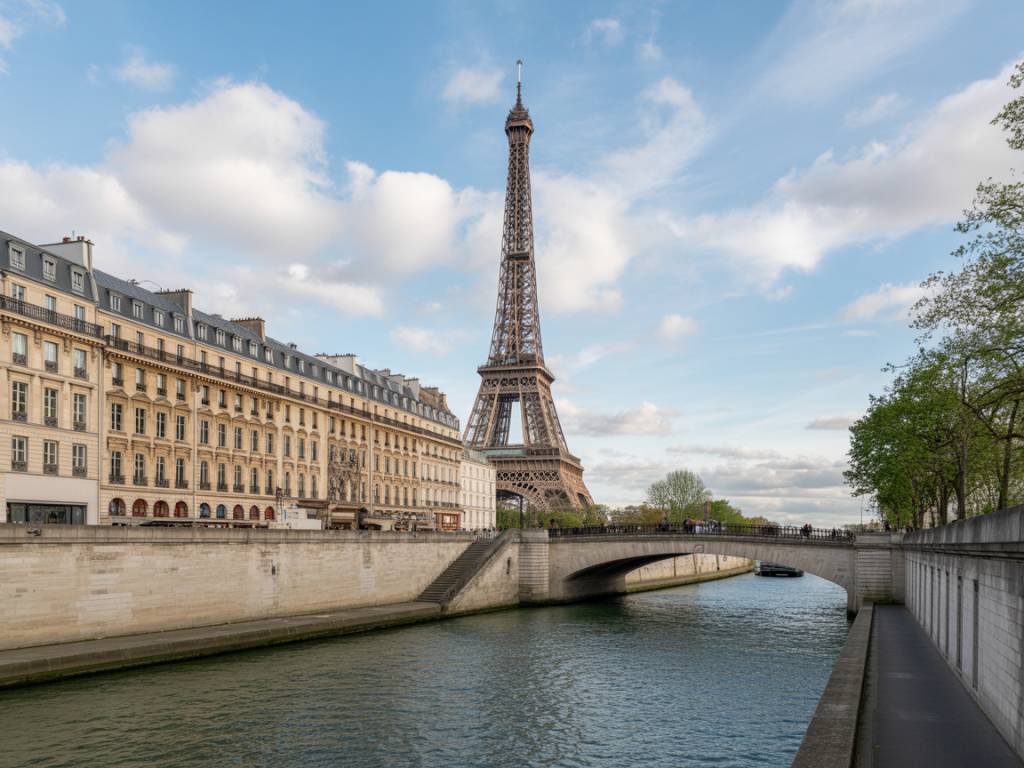
On a clear evening, standing with a takeaway crêpe in hand and watching the first sparkle is usually when visitors tell me, “Okay, now I really feel like I’m in Paris.”
Dinner near the Eiffel Tower
The immediate streets around the tower are full of mediocre places banking on their location. Walk 10–15 minutes away and things improve quickly.
Look around Rue Cler, Rue Saint-Dominique, or the residential streets near École Militaire. You’ll find:
Budget-wise, expect:
By the time you finish dinner and walk back past the tower one last time, you’ll probably be ready to sleep very, very well.
What this first day really costs
Here’s a realistic budget estimate per person, excluding accommodation and long-distance transport:
Approximate total:
Practical tips & backup plans
Transport basics
Safety & comfort
If it rains
If you’re exhausted by mid-afternoon
Your first day in Paris doesn’t have to include every famous sight to be memorable. If you end it with a few clear images in your mind – the stained glass of Sainte-Chapelle, the green chairs in the Luxembourg Gardens, the reflection of the Eiffel Tower on the Seine at dusk – and the feeling that you’ve walked real streets and not just postcard viewpoints, then you’ve started your relationship with the city the right way.