Exploring paris by bike: safe routes, rentals and etiquette for visitors who want to pedal the city
Exploring paris by bike: safe routes, rentals and etiquette for visitors who want to pedal the city
When visitors ask me if it’s a good idea to explore Paris by bike, my answer is always the same: “Yes, but not everywhere, and not n’importe comment.” Paris has improved a lot for cyclists in the last ten years, but it’s still a big, busy city with drivers who don’t always appreciate wobbling tourists in front of their bumpers.
If you want to enjoy Paris by bike without spending the afternoon stressed or lost in a scary roundabout, you need three things: safe routes, a good rental option, and basic bike etiquette. Let’s go through all three, with real examples from the streets I ride every week.
Where it really feels safe to cycle in Paris
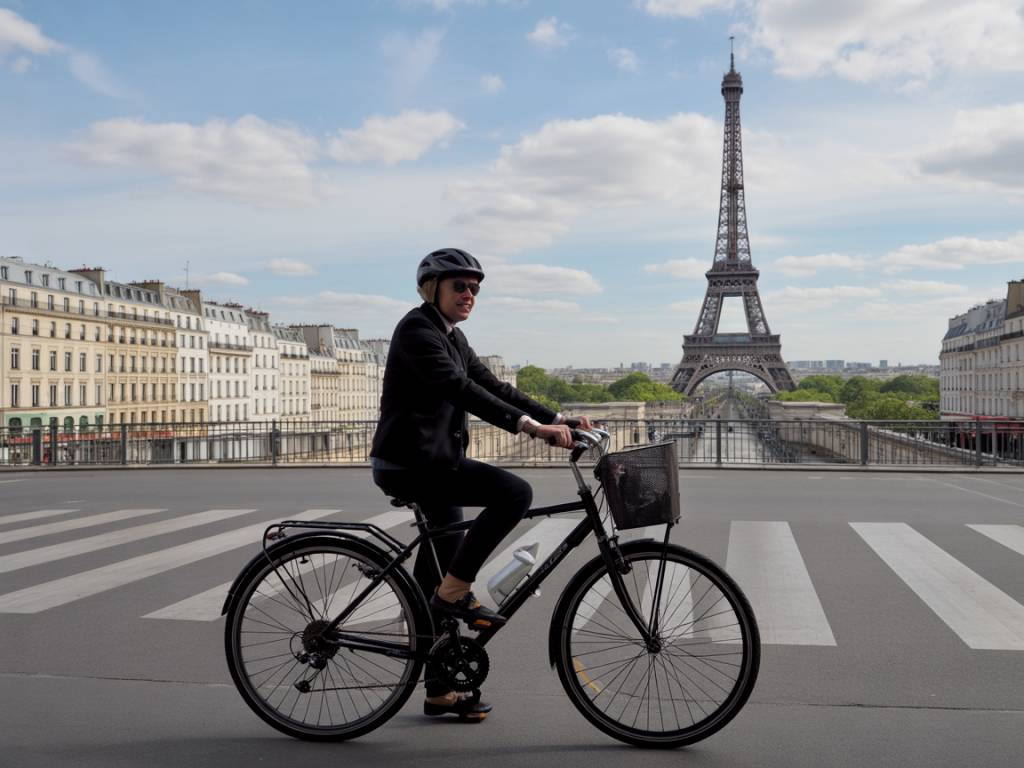
Forget the Instagram photo of you pedalling alone across an empty Pont Neuf at sunset. In real life, Paris traffic can be dense, and some bridges and squares are still nightmares on two wheels. But there are also genuinely pleasant, protected routes where even beginners can feel comfortable.
Here are the areas and axes I recommend first to visitors.
1. The riverside paths along the Seine (Right Bank & Left Bank)
This is usually where I send nervous beginners on their first ride.
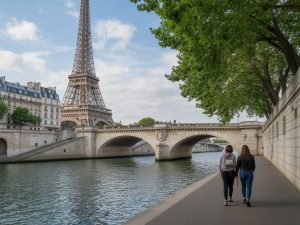
- Where: From around Bastille (Port de l’Arsenal) to the Eiffel Tower, mainly on the Left Bank, plus sections of the Right Bank between Hôtel de Ville and the Louvre.
- Type of lane: Mostly separated from cars, sometimes shared with pedestrians at walking speed.
- Why it works: Few cars, easy navigation (just follow the river), many “exit points” near metro stations.
On a Sunday morning in summer, it’s almost peaceful: joggers, families with kids, a few delivery bikes. I often see travellers practising with a Vélib’ here before tackling the rest of the city. Good idea.
Tip: Start near Pont de Sully around 9:30–10:00 am. You avoid the peak of joggers and you reach the Eiffel Tower in about 35–40 minutes at an easy pace, stopping for photos.
2. The “Rivoli axis”: from Bastille to the Louvre and beyond
Rue de Rivoli has become a kind of cycling highway. Don’t picture a quiet village lane: it’s busy, sometimes chaotic, but the bike lane is wide and mostly separated from cars.
- Where: Place de la Bastille → Rue Saint-Antoine → Rue de Rivoli → Concorde → Champs-Élysées (partly).
- Type of lane: Bidirectional, wide, with clear markings. Taxis and buses on a separate lane.
- Why it works: It crosses central Paris east–west, lets you link key spots (Bastille, Marais, Hôtel de Ville, Louvre, Tuileries) without riding with cars.
If you’re staying in the Marais or near Bastille, this is your best “spine” to structure your explorations. Just be ready for:
- Fast local cyclists (they will overtake you; keep right).
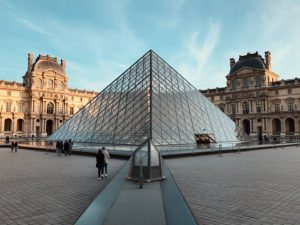
- Tourists walking in the bike lane to take photos of the Louvre (ring your bell, slow down).
- Scooters occasionally sneaking in (none of us like it, but it happens).
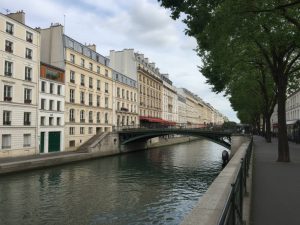
3. Canal Saint-Martin & Canal de l’Ourcq: easy, flat, local
If you want to feel more “neighbourhood” and less “postcard”, follow the canals.
- Where: Start at Place de la République or Jaurès, then follow Canal Saint-Martin and Canal de l’Ourcq towards Parc de la Villette and beyond.
- Type of lane: Mix of bike lanes on the road and long sections of towpath shared with pedestrians.
- Why it works: Flat, relaxed, with cafés, boulangeries, and picnic spots. Good for a half-day outing.
The stretch from Jaurès to Parc de la Villette takes about 10–15 minutes by bike. It’s an easy ride with plenty of places to stop for a coffee or a crêpe. On a sunny Saturday afternoon, expect strollers, dogs, and kids on scooters; ride slowly and enjoy the atmosphere.
4. The Left Bank “university” loop
For a calmer feel than the Right Bank, I like sending guests through the Latin Quarter and around the universities.
- Suggested loop: Jardin du Luxembourg → Panthéon → Rue Mouffetard → Jardin des Plantes → Quai Saint-Bernard → back along the Seine.
- Type of lane: Mix of protected lanes and quiet one-way streets, often slowed by speed bumps.
- Why it works: Lower car speed, many students and locals on bikes, lots of cafés if you need a break.
It’s not 100% car-free and there are some gentle slopes (up to the Panthéon, for example), but nothing extreme. An e-bike makes it even easier.
Areas and spots where I don’t recommend beginners to ride
Some places are beautiful on foot and stressful on a bike. Unless you’re an experienced urban cyclist, I would avoid these or cross them only at off-peak times.
- Place de l’Étoile (Arc de Triomphe): It looks romantic in movies. In reality, it’s 12 avenues pouring cars into a giant barely-marked roundabout. Take the underground pedestrian passage or walk your bike on the sidewalk around it.
- Big boulevards at rush hour (8–9:30 am, 5:30–7:30 pm): Boulevard Magenta, Boulevard Saint-Germain, etc. The bike lanes exist, but the vibe isn’t ideal for a relaxed visitor ride.
- Some parts of the northern ring between Barbès & Porte de la Chapelle: Busy, chaotic, often with delivery trucks. You can ride there, but I wouldn’t send a jet-lagged tourist through it on day one.
- Cobblestone hills in Montmartre: Montmartre itself is lovely on a bike… if you’re used to short, steep climbs, narrow streets, and tourists stepping into the lane without looking. For many visitors, it’s easier to lock the bike at the bottom and explore on foot.
Quick rule of thumb: if a place looks like a traffic knot when you pass it in a taxi, it won’t magically become pleasant on a bike.
The main bike rental options (and who they’re for)
Let’s talk rentals. You have three main choices: Vélib’, private bike shops, and guided bike tours.
1. Vélib’: cheap, everywhere, not always intuitive
Vélib’ is the public bike-sharing system. I use it regularly, but I live here and I know the docking logic. For a visitor, it can be a bit confusing at first, especially when a station is full or empty.
- Price: From around €5–€8 for a 24-hour pass, depending on options; first 30 minutes of each ride often included or cheaper on mechanical bikes, electric bikes cost more per use.
- Where: Almost every 300–400 metres inside Paris.
- Good for: Short trips (10–20 minutes), people who don’t mind fiddling with an app, spontaneous rides.
- Less good for: Families with children, those wanting the same bike all day, nervous beginners.
Real-life detail: On a busy Saturday around Le Marais, you can easily spend 10–15 minutes finding a station with free docks to return your Vélib’. That’s fine if you’re used to it, frustrating if you’re on a tight schedule before a museum reservation.
Tip: If you choose Vélib’, download the app before you arrive, add your payment method, and test your login once. Do this at your hotel with Wi-Fi, not in the rain on a busy street corner.
2. Private rental shops: better for a full day
A classic bike rental shop is often the most comfortable option for travellers.
- Price: Roughly €15–€25 per day for a mechanical city bike, €30–€45 for an e-bike. Discounts sometimes for multiple days.
- What you get: A properly adjusted bike, lock, often a basket, sometimes a helmet (ask), quick briefing on the best nearby routes.
- Good for: Half-day or full-day rides, less time lost, couples or friends who want to stay together with similar bikes.
Many shops are around Le Marais, Latin Quarter, and near the big train stations (Gare du Nord, Gare de Lyon). I like the ones that give you a simple printed map with their favourite routes – it’s usually more honest than glossy tourist brochures.
Practical tip: Book ahead in high season (May–September, especially weekends). I’ve seen visitors arrive at 11:00 am on a sunny Saturday in June and find every decent bike rented until the afternoon.
3. Guided tours: cycling with a safety net
If you’re not comfortable navigating alone, a guided bike tour can be a good introduction.
- Price: Around €35–€50 per person for 3–4 hours, bike included; e-bike tours are generally more expensive.
- Pros: Someone else chooses the route, you get commentary and orientation, and the guide usually knows which intersections are tricky.
- Cons: Fixed schedule and pace, often large groups in high season, not ideal if you want to stop for photos every 100 metres.
I often see first-time visitors start with a guided tour on day two of their trip, then rent bikes on their own the next day once they’ve “felt” the city a bit.
Bike etiquette in Paris: how not to annoy everyone (or get fined)
Parisian cyclists are sometimes a bit… creative with rules. Don’t copy everything you see. Fines for traffic violations apply to bikes too, and the police are more attentive than many visitors expect.
Here are the basics you should really respect:
- Red lights are red for you too. Yes, many locals sneak through if it’s empty. If you’re unfamiliar with the intersection, don’t. Some red lights have a little sign that allows bikes to turn right or go straight with caution – respect the arrows on the sign.
- Use the bike lanes, not the sidewalks. Riding on the sidewalk is generally forbidden and will annoy pedestrians quickly. If you feel unsafe on a particular street, get off the bike and walk until you find a calmer route.
- Pedestrian priority in crossings and shared areas. On shared quays by the Seine or in parks, bikes must adapt to the walking pace. It’s not the place to test your Tour de France ambitions.
- Signal your intentions. A simple arm signal left or right is enough. Paris drivers are not always gentle, but most will respect a cyclist who is predictable.
- Don’t ride with headphones or your phone in your hand. Apart from being risky, it can lead to fines.
- Lock your bike properly. Always lock the frame (not just the wheel) to a fixed point. At night, favour well-lit, busy streets. I’ve had two friends lose poorly locked bikes in the same year around Gare du Nord – it happens fast.
And a social tip: a quick “pardon” or “merci” goes a long way when you pass close to pedestrians or other cyclists. You’re in their city; showing a bit of respect usually gets it back.
What to wear and what to bring
You don’t need a full cycling outfit to ride in Paris. What you wear to walk around is usually fine, with a few adaptations.
- Footwear: Closed shoes are better than sandals if you’re not used to city cycling.
- Bag: A small backpack is more practical than a shoulder bag that keeps slipping. Many rental bikes have baskets – just don’t leave valuables unattended in them.
- Helmet: Not compulsory for adults in France, but recommended, especially if you’re nervous. Some rental shops provide them; with Vélib’, you need your own.
- Rain: A light foldable rain jacket in spring and autumn can save your day. Paris showers can be short but intense.
- Phone mount (optional): If you’re confident, a simple handlebar mount with offline maps can be very useful. But if you’re constantly staring at Google Maps, you’ll miss both the scenery and the potholes.
Sample itineraries: how to structure your day by bike
To give you an idea of what’s realistic, here are two sample routes I often suggest to friends visiting, with approximate times and budgets.
Half-day classic highlights (about 3–4 hours with stops)
- Start: Bastille (pick up a rental bike at 9:30 am).
- Follow the bike lane to Place des Vosges and a quick tour of Le Marais.
- Join Rue de Rivoli → ride to the Louvre (15–20 min with photo stops).
- Continue to the Tuileries and Place de la Concorde.
- From Concorde, drop down to the riverside path and ride to the Eiffel Tower (25–35 min, easy pace).
- Optional picnic on the Champ de Mars or a café stop in Rue Cler.
Time: 2 hours pure riding, easily 3–4 hours with stops. Budget: About €15–€20 per person for a standard rental bike + snacks.
Neighbourhood & local life loop (about 3 hours with stops)
- Start: Near République around 10:00 am.
- Ride along Canal Saint-Martin up to Jaurès, coffee break by the water.
- Continue to Parc de la Villette (Cité des Sciences, street art, big open lawns).
- Loop back via quieter streets of the 19th and 10th, or return along the canal in the other direction.
- Lunch in a bistro around Rue du Faubourg du Temple or back in Le Marais.
Time: 1.5 hours pure riding, 3 hours with breaks. Budget: Same as above; more if you visit exhibitions in Parc de la Villette.
Safety, police checks, and night riding
Is it safe to ride a bike in Paris? Statistically, Paris isn’t the worst city to cycle in, but it’s not Copenhagen. The main risks are at intersections and from vehicles turning without indicating. Good news: as a visitor, you’re likely to ride slower and more cautiously than locals; that already reduces the risk.
Police checks: You may see police checking e-bikes and scooters for speed or insurance. For normal rental bikes, it’s rare to be stopped unless you’re clearly breaking a rule (riding over a crowded sidewalk, running a busy red light, no lights at night, etc.). Keep your rental contract or Vélib’ pass handy on your phone just in case.
Night riding:
- Make sure your lights work (rental bikes usually have them built in).
- Stick to well-known axes: Seine quays, Rue de Rivoli, big boulevards with separated lanes.
- Avoid parks and dark side streets you don’t know; if you feel uneasy, hop off and walk or take the metro.
Personally, I enjoy riding along the Seine around 9–10 pm in summer when the sky is still a bit light and the monuments are illuminated. It feels like a film set, but you still have to watch for pedestrians with cameras in the middle of the lane.
When biking isn’t the best option (and what to do instead)
There are days when I leave the bike at home: heavy rain, strong wind, or when I know I’ll be criss-crossing very crowded areas on a tight schedule (for example, multiple museum visits with timed entries).
If you wake up and the weather is horrible or you’re simply too tired, don’t force the bike plan. A few good alternatives:
- Metro + walking: Still the fastest combo for long cross-city trips.
- Bus 69 or 72: Two classic lines that cover many sights with views, useful when your legs are done.
- Boat on the Seine (Batobus or sightseeing cruises): Not cheap if you treat it as “transport”, but it gives you a rest and a different angle on the city.
The goal isn’t to tick “bike Paris” off a bucket list. It’s to enjoy moving through the city at a human speed, without spending the ride gripping the handlebars in fear. Choose your routes, your bike, and your moments carefully, and Paris by pedal can become one of the best memories of your trip.