


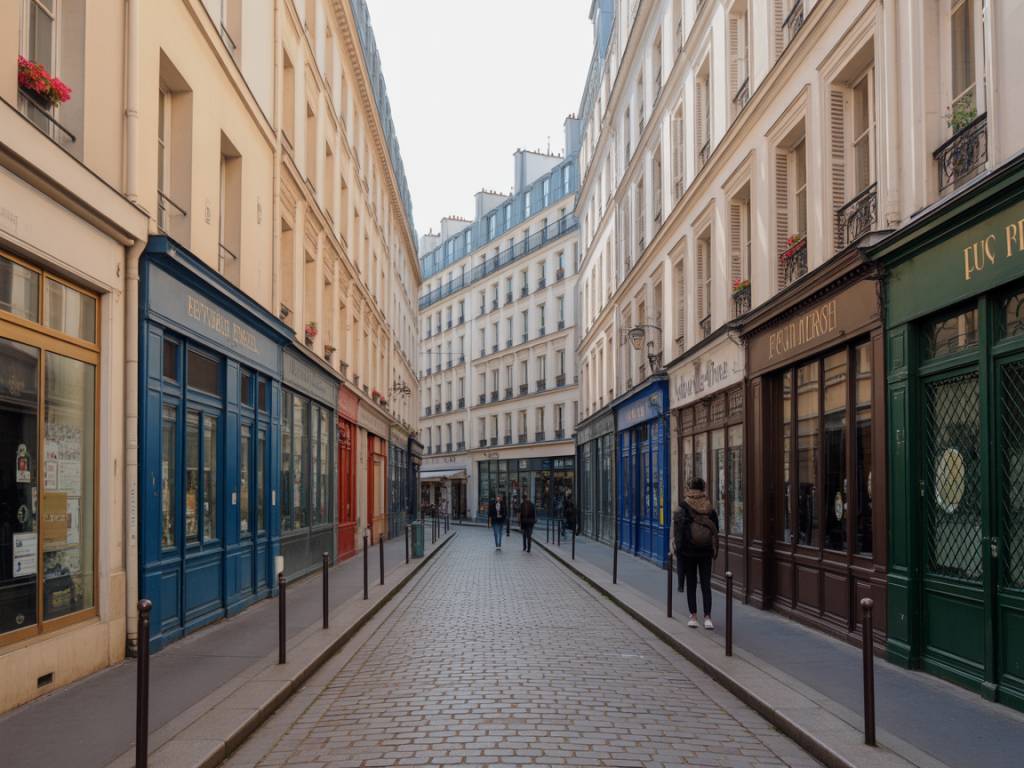
Paris sells itself on grand gestures — the Eiffel Tower, Haussmann’s sweeping boulevards, the gilded Opéra Garnier. But the city’s most quietly addictive experiences happen at a smaller scale, tucked just behind the noise. The hidden passages of Paris — glass-roofed arcades built in the early 19th century — are where the city stops performing and simply breathes. Most first-time visitors never find them. That’s about to change.
Hidden passages of paris: what are the covered arcades and why do they matter?
Known in French as passages couverts, these narrow pedestrian galleries were the world’s first indoor shopping streets. Built between roughly 1800 and 1850, long before Baron Haussmann tore up medieval Paris to make room for wide avenues, they offered something revolutionary: shelter from mud, rain, horse traffic, and cold — all under elegant iron-and-glass roofs, lit by gaslight.
At their peak, Paris counted over 150 of these arcades. Today, fewer than 20 survive, concentrated on the Right Bank in the 2nd and 9th arrondissements. Some are beautifully restored and buzzing with life. Others feel like they’re running on borrowed time, kept alive by a handful of stubborn booksellers and antique dealers. Both kinds are worth visiting.
Before you set off, here’s what to know practically:
- Free to enter — no ticket, no booking required
- Typical opening hours: 7:00 or 9:00 to 19:30; some close Sunday or for lunch
- Safe for solo travellers during opening hours
- Covered: ideal on rainy days, cold afternoons, or any day you’ve exhausted your patience for outdoor crowds
- Accessible: most are flat or have minimal steps
How to explore the secret covered arcades beyond the main boulevards: a half-day walking route
The good news for urban explorers is that Paris’s best passages cluster tightly enough to visit on foot in a single half-day. The walk below connects five arcades across the 2nd and 9th arrondissements, with optional detours. Allow 2.5 to 4 hours depending on how often you stop to browse.
- Start: Métro Grands Boulevards (lines 8 & 9)
- Step 1: Passage des Panoramas (2nd/9th) — entry from Boulevard Montmartre
- Step 2: Cross the boulevard → Passage Jouffroy (9th)
- Step 3: Continue straight through → Passage Verdeau (9th/10th)
- Optional detour: Passage Brady (10th) — 10-min walk east, best for an Indian lunch under €15
- Step 4: Walk or take bus 20/39 south-west (~15 min) → Galerie Vivienne (2nd)
- Step 5: Galerie Colbert (2nd) — connected, often quieter
- Finish: Coffee in the Palais-Royal gardens or a glass of wine on Place des Victoires
The walking time between passages is typically 5 to 15 minutes. The route feels unhurried even on busy weekdays, because the arcades themselves sit just far enough off the tourist circuit to stay calm.
Passage des Panoramas: the oldest arcade and the best place to start
Built in 1799, Passage des Panoramas is both the oldest surviving passage in Paris and arguably the most atmospheric. It runs between Boulevard Montmartre and Rue Saint-Marc, threading through a tight cluster of independent micro-galleries, each with its own entrance.
What you’ll find inside
- Stamp and coin dealers — some of the last in the city
- Vintage postcard stalls (prices: €0.50 to €5 for most cards)
- Old typography and signage that hasn’t changed since the 1950s
- Small wine bars and bistros popular with local office workers at apéro hour
Practical budget notes
- Glass of wine at a passage bar: €5–€8
- Main course at a mid-range bistro: €16–€24
- Crêpe or pastry + drink for kids: ~€6–€8 per person
The noise from Boulevard Montmartre vanishes the moment you step inside. At 18:30 on a weekday, the atmosphere shifts from quiet curiosity to relaxed neighbourhood apéro — locals in suits, booksellers closing their shutters, a tourist puzzling over an old envelope. That layering of everyday life and niche obsession is exactly what makes this passage worth lingering in.
Passage Jouffroy and Passage Verdeau: a time tunnel from wax figures to vintage cameras
Cross Boulevard Montmartre and you enter Passage Jouffroy, which flows seamlessly into Passage Verdeau — together forming a near-straight line of glass, tile and quiet commerce that feels genuinely cut off from the 21st century.
Passage Jouffroy highlights
- Elegant metal-and-glass ceiling with a slightly sloped tiled floor — look at the architecture, not just the shops
- Hôtel Chopin, tucked inside the passage: a well-located, unpretentious base for travellers who want character over anonymity
- Entrance to Musée Grévin (wax museum): worth it mainly with children or serious Francophile pop-culture fans; adult tickets run around €27, book online to save
- Toy shops and board game stores — excellent for non-plastic, non-Eiffel-Tower souvenirs
Passage Verdeau: the quieter gem
Verdeau is the one most Parisians still think of as « theirs. » Foot traffic drops sharply here, especially on weekday mornings. Expect:
- Antique photography equipment — vintage Leicas from €300, old prints from €10
- Second-hand books in French (€1 crates to curated shelves at €20–€60)
- Old maps and graphic ephemera — great for framing
- Occasional cats in shop windows, which is reason enough
The booksellers here have strong opinions and will share them freely. One redirected a tourist from a coffee-table book to a slim architectural guide for a third of the price: « Less Instagram, more information. » That ethos sums up Verdeau perfectly.
Galerie Vivienne and Galerie Colbert: the most refined arcades near Palais-Royal
A 15-minute walk south-west (or bus 20/39) brings you to a more polished pair. Galerie Vivienne is frequently described as the most beautiful passage in Paris — and for good reason.
Galerie Vivienne
- Built in 1823; classified as a historic monument since 1974
- Stunning mosaic floor — genuinely worth looking down at as you walk
- Arched glass roof and warm beige stonework that glows in afternoon light
- Chic fashion boutiques, a well-stocked wine shop, and design bookstores
- Entry discreet via Rue des Petits Champs, Rue de la Banque or Rue Vivienne — easy to miss if you’re not looking
Budget reality check: coffee here runs €4–€6, wine by the glass €12–€18 in the upscale wine bar. If that’s out of range, enjoy the passage for free — the architecture costs nothing — then grab an espresso on Rue Vivienne for €2.50–€3.
Galerie Colbert
Connected to Vivienne and managed by the Institut National d’Histoire de l’Art (INHA), Galerie Colbert has a different energy: more academic, fewer boutiques, more breathing room. Its highlight is a spectacular glass rotunda at the centre — one of the finest interior spaces in any Paris arcade. Entry is free; temporary exhibitions sometimes take place inside.
Beyond the main route: more hidden passages worth seeking out
For urban explorers with an extra hour or a second day, several other arcades deserve attention:
- Passage Brady (10th): entirely different in character — Paris’s informal South Asian food street, roofed and full of Indian, Pakistani and Sri Lankan restaurants. Lunch thali menus from €10–€14. Lively, fragrant, nothing like the other passages.
- Passage du Grand-Cerf (2nd): the tallest glass roof of any Paris passage (around 12 metres). Contemporary craft shops and design studios. Quieter than Panoramas, more creative in feel.
- Galerie Véro-Dodat (1st): one of the most preserved and eerie arcades in the city. Black-and-gold columns, painted ceilings, almost no shops — feels like a stage set. A 10-minute walk from Galerie Vivienne.
Tips for curious urban explorers visiting Paris’s covered arcades
- Go mid-week, mid-morning for the quietest experience — most passages see peak traffic at lunch and late afternoon
- Bring cash: several small dealers and booksellers don’t accept cards
- Check Sunday opening: Passage Jouffroy and Galerie Vivienne are usually open Sunday afternoons; Passage Verdeau often closes Sunday
- Photography: natural light from the glass roofs is best between 10:00 and 14:00; no flash needed
- Combine with Palais-Royal: the gardens are a 10-minute walk and a natural way to end the afternoon
- Use Google Maps offline: the passages don’t always appear clearly on maps; screenshot the street entrances before you go
The covered arcades of Paris won’t appear on most « top 10 » lists, and that’s precisely their value. They ask for nothing except a little curiosity and a willingness to look left when everyone else looks straight ahead. Whether you have half a morning or a full afternoon, these glass-roofed corridors offer a version of Paris that’s slower, stranger, and more honest than anything you’ll find on the main boulevards.