


Why your Paris neighbourhood choice matters more than your hotel stars
If you remember one thing from this article, let it be this: in Paris, your neighbourhood will shape your stay more than your hotel room. You’ll spend your days in the streets, cafés, metro and museums – not in your bed.
I’ve welcomed hundreds of visitors when I was a hotel receptionist near Opéra. The happiest guests were rarely the ones in the fanciest rooms. They were the ones who had chosen the right area for their rhythm, their budget and their travel style.
So let’s do what most booking sites don’t: start with how you travel and how you want to feel, then match that to the right part of Paris.
First, define your “Paris mood” and travel style
Before we talk arrondissements, ask yourself a few very practical questions. It will save you time, money and frustration.
What’s your mood?
- Romantic & quiet: Cobblestone streets, small squares, wine bars, Seine views.
- Lively & social: Bars, late dinners, street life, people-watching.
- Local & residential: Markets, bakeries, fewer tourists, everyday Paris.
- Cultural & intense: Museums, monuments, walking all day, back late but exhausted.
What’s your real budget per night (accommodation only)?
- Low: under 120€ for two people – think budget hotels, simple studios, hostels.
- Medium: 120–220€ – decent 2–3* hotels, small apartments in central or semi-central areas.
- Comfortable: 220–350€ – charming 3–4* in good locations, renovated flats.
- High: 350€+ – 4–5*, prime central locations, views, services.
How do you move around?
- Walkers: Happy to walk 20–30 minutes several times a day.
- Metro riders: OK with 15–30 minutes underground, changing lines.
- Minimal movers: Prefer to stay close to the main sights, especially with kids or mobility issues.
Keep your answers in mind; we’ll use them district by district.
Classic central neighbourhoods for first-timers
If it’s your first time in Paris and you want to see the main sights without spending half your day in the metro, these areas are usually the most efficient choices.
Saint-Germain & Latin Quarter (5th & 6th): Elegant, walkable, atmospheric
Mood: Romantic, historic, café culture. Budget: Medium to high. Best for: First-timers, couples, short stays without kids.
From Saint-Germain, you can walk to Notre-Dame, the Louvre, Luxembourg Gardens and the Seine in 10–20 minutes. That’s not “Google Maps if you run”, that’s real walking time that even my slower guests managed daily.
Typical nightly budget for a decent double room:
- Low season (Jan–Feb, Nov, excluding holidays): 150–220€
- Mid season (Mar–Apr, Oct): 220–280€
- High season (May–Sep, Dec): 250–350€+
Pros:
- You can do an entire first-timer itinerary mostly on foot.
- Evening feels safe and lively; lots of restaurants open late.
- Beautiful architecture and “Paris postcard” cafés (yes, including the overpriced ones).
Cons:
- Tourist traps around Odéon and near the river – laminated menus, aggressive “come in please”.
- Small rooms; many older buildings with thin walls and no real soundproofing.
- Lower-end options can be disappointing for the price.
Reality check anecdote: A few years ago, a couple from Canada insisted on staying “right next to Notre-Dame” with a tight budget. They ended up in a 2* hotel in a side street: clean, but tiny room, mattress tired, view on a wall. They loved the location but told me honestly: “For this price, next time we’ll stay 10 minutes further by metro and get a better room.”
Good if: You’d rather pay more for location and save time than get a bigger room further out. Not ideal if: Your budget is under 150€ per night and you’re picky about comfort.
The Marais (3rd & 4th): Trendy, central, mixed crowd
Mood: Lively, creative, LGBTQ+-friendly, good for food and shopping. Budget: Medium to high. Best for: Friends, solo travelers, culture lovers.
The Marais stretches from the Seine up to République. Expect narrow streets, boutiques, falafel places, art galleries and a mix of locals, expats and visitors. On Sundays, many shops stay open, which is rare in Paris.
Location in practice:
- Walk to Notre-Dame: 10–15 minutes.
- Walk to the Louvre: 20–25 minutes (or metro line 1, about 10 min with walking).
- Metro to Eiffel Tower: 25–35 minutes with one change.
Pros:
- Lots of restaurants and bars in a compact area.
- Good metro connections (lines 1, 8, 11, etc.).
- Safer late at night than many cheaper “party” zones.
Cons:
- Nightlife noise on weekends, especially near busy streets.
- Apartments can be charming but old – check for elevator if you hate stairs.
- Prices creeping up every year.
Good if: You want central, walkable and social without feeling stuck in a tourist bubble. Not ideal if: You’re noise-sensitive and staying near Rue de la Verrerie, Rue Vieille du Temple or right next to bars.
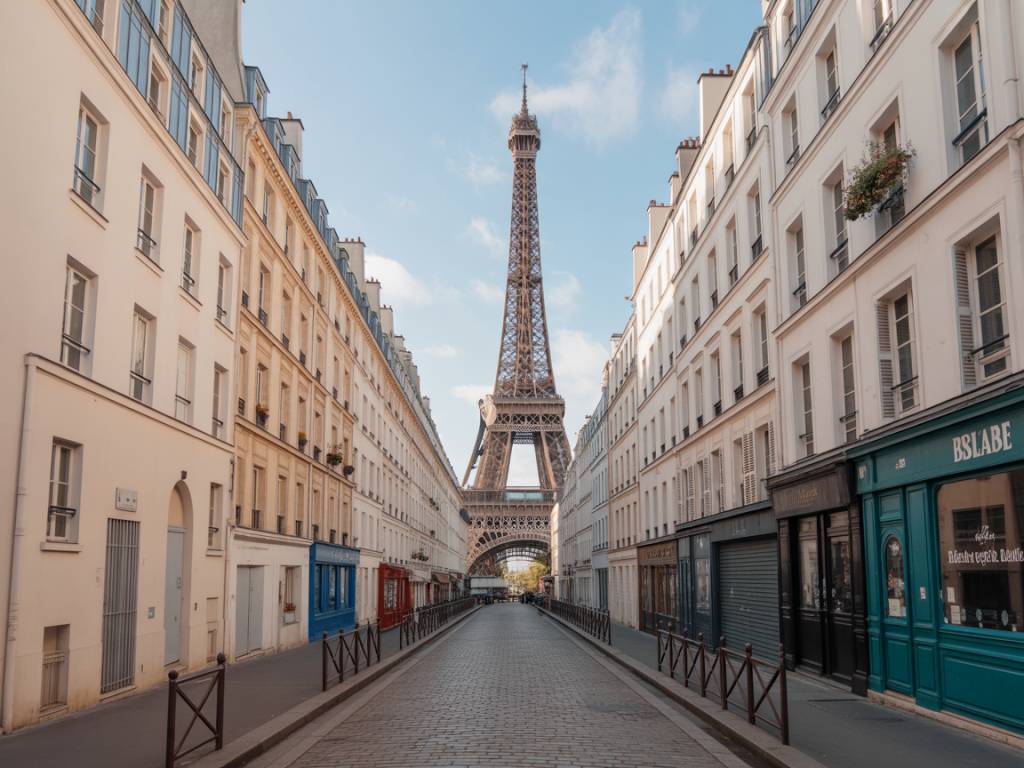
Near the Eiffel Tower (7th & western 15th): Prestige and quiet streets
Mood: Calm, residential, postcard views. Budget: Medium to very high, depending on how close you are to the tower. Best for: Families, early sleepers, Eiffel Tower fans.
Staying near the Eiffel Tower looks perfect on Instagram. In real life, it’s quieter and more residential than visitors expect, especially at night once the tour buses leave.
Reality of distances:
- Eiffel Tower to Louvre: 25–30 minutes by metro, 40+ minutes walking.
- Eiffel Tower to Notre-Dame: 30–35 minutes by metro.
- Good buses, but they sit in traffic at rush hour.
Pros:
- Safe, elegant streets; many embassies and government buildings.
- Excellent for evening walks along the Seine.
- Rue Cler area offers that “village street” feeling with food shops.
Cons:
- You pay a premium just to be near one monument.
- Fewer affordable restaurants; lots of “view” places with tourist prices.
- Gets a bit dull if you like busy nightlife.
Good if: You want a calm base and don’t mind daily metro rides to reach other sights. Not ideal if: You dream of walking everywhere to save on transport.
More local, budget-friendlier neighbourhoods
If you’re watching your budget or want to experience a more everyday Paris, these areas are worth considering. You’ll spend a bit more time on the metro but usually sleep better and eat for cheaper.
Bastille & Eastern 11th: Lively, authentic, good value
Mood: Young, dynamic, lots of bars and bistros. Budget: Low to medium. Best for: Night owls, foodies, second-time visitors.
Think of the area between Bastille, Ledru-Rollin and Voltaire. Fewer monuments, more real life. At 7:30 am, you see parents with kids going to school, people grabbing a croissant on Rue de Charonne, shopkeepers opening their stores – not a tour group in sight.
Typical nightly budget for a decent double room:
- Low season: 100–160€
- High season: 150–220€
Pros:
- Very good metro connections (lines 1, 5, 8, 9, etc.).
- Real neighbourhood feel; great bakeries and wine bars.
- More space for your money than in Saint-Germain or the Marais.
Cons:
- Some streets around Bastille get loud and messy at 2–3 am on weekends.
- Fewer “walk to the main monuments” options.
- Variety in street atmosphere from one block to another – always check exact address.
Good if: You’re happy using the metro and want to balance budget and atmosphere. Not ideal if: You’re sensitive to nighttime noise and accidentally pick a room above a bar strip.
Montparnasse & southern 14th: Practical, underrated
Mood: Residential with a business touch, practical rather than glamorous. Budget: Low to medium. Best for: Budget-conscious travelers, families, people arriving by train to Gare Montparnasse.
Montparnasse is not the Paris of romance movies, but it’s efficient. Many hotels, often better value for money, and excellent transport. This is where I recommend guests who say, “We want something safe, practical and not too touristy.”
Pros:
- Plenty of 2–3* hotels with decent rooms.
- Major metro hub; easy to reach almost anywhere.
- Good mix of chain restaurants and local spots; late-night options.
Cons:
- Architecture is mixed; some parts feel business-like.
- Not many “wow” views.
- You’ll always be taking the metro to reach big sights.
Good if: You care more about comfort and price than about having a romantic corner café under your window. Not ideal if: You want to step out of your hotel and instantly see a monument.
Canal Saint-Martin & upper 10th: Hip, slightly gritty, social
Mood: Bohemian, young, café terraces, picnics by the water. Budget: Low to medium. Best for: Younger travelers, solo visitors, repeat visitors.
On sunny evenings, you’ll find groups sharing wine and pizza along the canal. When I walk there, I always hear more French than in the city center, which is a good sign if you want a local feel.
Pros:
- Plenty of bars and casual restaurants.
- Good value for apartments and some boutique hotels.
- Easy access to Gare du Nord and Gare de l’Est (if you arrive by train).
Cons:
- Like any trendy area, some streets are noisy very late.
- Closer to the major stations can feel less charming, more chaotic.
- Not ideal if you want a very polished or “luxury” environment.
Good if: You like local cafés and don’t need to be near monuments. Not ideal if: You’re nervous about big-city edges around train stations.
Neighbourhoods that need a bit more research
Some areas are heavily marketed as “authentic” or “bohemian”, but on the ground they require more attention to street-by-street atmosphere, especially for first-timers.
Montmartre (18th): Magical hill… with stairs, crowds and contrasts
Mood: Romantic village on the hill, but busy and touristy around Sacré-Cœur. Budget: Very mixed; some cheap, some pricey boutique hotels. Best for: Photographers, couples who don’t mind hills, night owls.
Here, the details matter. Living near Rue des Abbesses with its bakeries and small squares is not the same experience as staying near Barbès and the big boulevards below.
Reality on foot:
- Lots of stairs and slopes; not great if you have mobility issues.
- To go downtown: usually 20–30 minutes by metro with one change.
- The Sacré-Cœur area is very crowded most of the day; early mornings and late evenings are best.
Pros:
- Some of the prettiest streets in Paris (away from Place du Tertre).
- Good nightlife, especially around Pigalle (with its pros and cons).
- Can be cheaper than equally “romantic” central areas.
Cons:
- More pickpockets and scams near Sacré-Cœur.
- Steep streets – a problem for kids, strollers or travelers with knee issues.
- Big contrast between charming hilltop and less charming lower boulevards.
Good if: You know what you’re choosing and pick your exact street with care. Not ideal if: It’s your very first time and you want easy access to everything.
Champs-Élysées & Arc de Triomphe (8th & 17th borders): Famous, but is it worth it?
Mood: Busy, commercial, a bit flashy. Budget: Medium to very high. Best for: Fans of big brands, business trips, short stays with airport shuttles.
Many visitors associate the Champs-Élysées with luxury. On the ground, it’s a wide avenue packed with chain stores, tourists, high prices and traffic. The side streets can have excellent hotels, but you pay a premium for a location that’s not particularly atmospheric.
Pros:
- Good for airport bus/shuttle connections at Charles de Gaulle Etoile.
- Direct line 1 to the Louvre and Marais.
- High-end hotels with professional service.
Cons:
- Street life is more commercial than charming.
- Restaurants on the avenue itself are overpriced for average quality.
- Evening atmosphere can feel anonymous compared to Saint-Germain or the Marais.
Good if: You prioritize brand-name hotels and easy airport access. Not ideal if: You want to feel like you’re in a “real” Paris neighbourhood.
Safety, noise and comfort: things brochures don’t tell you
Paris is not a dangerous city by global standards, but it is a big city. Your experience will depend heavily on the exact street you choose.
Safety basics:
- Pickpocketing is more common than violent crime – especially on crowded metro lines and around big sights.
- Avoid very late-night wandering around big stations (Gare du Nord, Gare de l’Est) if you’re alone and tired.
- In most residential streets of central and semi-central areas, you’ll see people walking dogs or returning from dinner at 23:00–00:00 without concern.
Noise basics:
- If you’re noise-sensitive, ask for a courtyard room or higher floor when booking.
- Check the map for nearby bars and clubs; Google Street View at night (you’ll often see terraces and lights).
- A pretty cobblestone street with five bars can be louder at 2 am than a big avenue.
Comfort basics in older buildings:
- Elevators are not guaranteed in older Parisian buildings; always check if that matters to you.
- Air conditioning is not universal, especially in budget hotels and older apartments – crucial in summer.
- Rooms are small. If you need space, look slightly outside the very center.
How to match a neighbourhood to your itinerary
Instead of starting with “Which arrondissement is the best?”, start with your daily plan.
If your plan is “see all the main sights in 3 days”
- Base: Saint-Germain, Latin Quarter, the Marais, or near the Louvre.
- Why: You’ll walk to many places and save 30–60 minutes of metro per day.
- Budget tip: Accept a smaller room and spend the difference on skip-the-line tickets and early time slots.
If your plan is “take it slow, cafés, a museum per day”
- Base: Marais, Bastille/11th, Canal Saint-Martin, Montparnasse.
- Why: Good cafés and local life; you’re not racing between monuments anyway.
- Budget tip: A mid-price, comfortable base will matter more than a hyper-central but cramped room.
If your plan includes day trips (Versailles, Giverny, Loire etc.)
- Base: Near a train station you’ll use often (Montparnasse for Brittany/Loire, Saint-Lazare for Giverny, Austerlitz/Lyon/Bercy for the south).
- Why: Less stress early morning with trains; you’re not dragging luggage across the whole city.
- Budget tip: These zones can be cheaper than the very center; invest in a better hotel category.
When your first choice is fully booked or over budget
Let’s say you dreamed of the Marais but prices made you swallow your coffee. Here are some practical “Plan B” swaps that work well:
- Instead of the Marais → look at Bastille/eastern 11th or southern 10th near République. Similar atmosphere, slightly less polished, noticeably cheaper.
- Instead of Saint-Germain → check Latin Quarter (5th) a bit further from the Seine, or Montparnasse for a more practical base.
- Instead of Eiffel Tower area → try 15th arrondissement near La Motte-Picquet Grenelle or Commerce. Still residential, less expensive, better everyday shops.
- Instead of Montmartre hilltop → look at south Pigalle (SoPi) or the 9th arrondissement around Saint-Georges: lively, charming, better metro, fewer stairs.
When I helped guests relocate after a disappointing first night (tiny noisy room, broken AC, “view” on a wall), the happiest moves were usually from over-marketed central micro-rooms to slightly off-center but comfortable 3* hotels. They immediately said: “We feel like we can breathe again.”
Final checklist before you book
Before you click “reserve”, check these points:
- Walking radius: What can you reach in 15–20 minutes on foot from your hotel? Is that what you really care about?
- Metro lines: Which lines are within 5–7 minutes’ walk? How many changes to reach 2–3 key sights you want?
- Street view test: Look at the building on Google Street View. Bars downstairs? Four-lane avenue? Or calm side street?
- Night photos in reviews: Any complaints about noise, safety, broken AC?
- Morning needs: Is there a bakery, a café, a small supermarket within 3 minutes? You’ll care about this more than the reception chandelier.
- Arrival/departure logistics: How will you get from the airport/train station to your hotel with luggage? One direct RER/metro line? Taxi? How long, realistically?
If your neighbourhood ticks these boxes for your mood, your budget and your travel style, you’re on the right track. In the end, “the best area in Paris” is simply the one that lets you live the kind of days – and nights – you actually enjoy, without wasting time or money on the wrong side of the city.