


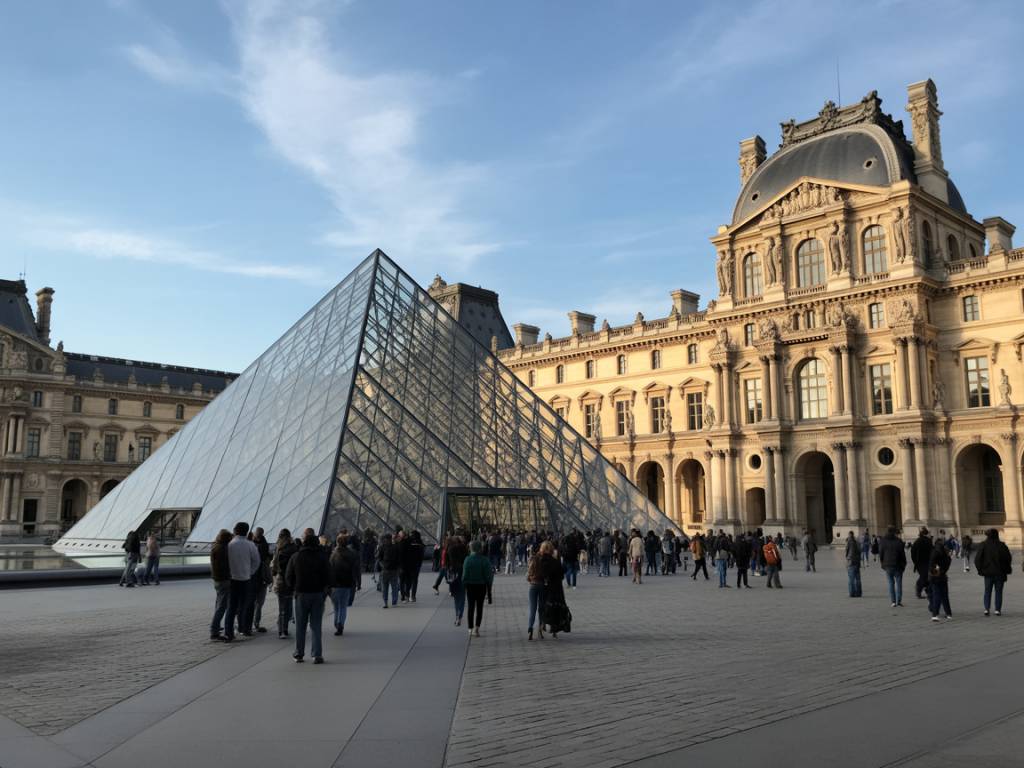
Everyone tells you the same thing about the Louvre: “It’s amazing… but the crowds are insane.” As a former hotel receptionist a 10-minute walk from the museum, I’ve seen both sides: guests coming back dazzled, and others returning exhausted, saying, “Never again.”
The truth? You can’t “have the Louvre to yourself” (unless you rent it out for a private event, and that’s another budget). But you can experience it with manageable crowds, little waiting, and enough energy left to enjoy a glass of wine afterwards.
Here’s how to make the most of the Louvre on any day of the week, with concrete timings, routes, and backup plans, based on what actually works on the ground in Paris—not on glossy brochures.
Understand the Louvre’s rhythm before you pick your day
Before you even book your ticket, it helps to understand how the week is structured at the Louvre. It’s not the same experience on a Wednesday afternoon as on a Saturday morning.
General pattern (subject to change, always check official website):
- Closed: usually Tuesday
- Late openings (evening hours): typically Friday (and sometimes Wednesday), often until 21:45
- Busiest days: Saturday, Sunday, most public holidays
- Moderate days: Monday, Wednesday, Thursday, Friday daytime
From experience, the museum has two big “pressure points”:
- 10:30–14:30: peak arrival time for tour groups and day trippers
- 2–3 hours after opening: when security and ticket lines get longest
If you want fewer crowds, your game is simple: arrive before the pressure point starts, or come after it passes.
Best times to visit depending on your day of the week
Monday & Thursday: good all-rounders. If you arrive at opening time, you’ll have the calmest 1–2 hours of the day. By 11:00, it gets busy but still bearable.
Wednesday & Friday (with late opening): ideal if you like quieter evenings. Many visitors don’t realise the museum is open late, or they’re too tired after a full sightseeing day. From around 18:30, the atmosphere is noticeably calmer, especially outside the “superstars” like the Mona Lisa.
Saturday & Sunday: go only if you can’t do another day. If that’s your case, treat it like a mission: arrive at opening time or 1.5–2 hours before closing, and be realistic about how much you can see. Trying to “do the whole Louvre” on a Saturday is the perfect recipe for frustration.
Personally, when friends visit, I aim for a Friday evening or a Thursday morning. You get a good balance of energy, daylight (if you want to stroll in the Tuileries before/after), and manageable crowds.
Skip the worst of the lines: tickets and entrance strategy
At the Louvre, your first battle is not with crowds inside, it’s with the entrance itself. Most people pile up under the glass pyramid, often without a pre-booked ticket, and then complain about the wait.
To make your life easier:
1. Always pre-book a timed ticket
Buy your ticket directly on the official Louvre website. Avoid reseller platforms that upsell “skip the line” passes that don’t always deliver more than the standard timed entry.
Choose a time slot either at opening, or for the start of the evening session on late-opening days.
2. Use the lesser-known entrances (when available)
The main pyramid entrance is iconic but often the most crowded. If you already have a ticket, consider these alternatives (check current access conditions on the official site, as these can change with security measures):
- Carrousel du Louvre entrance (underground mall): You enter from the Rue de Rivoli side via the Carrousel shopping mall. Early in the morning and in the evening, it’s often quieter than the pyramid.
- Porte des Lions entrance: Situated on the southwest side of the building (near the Seine). Historically, it could be much faster, but it’s not always open and sometimes only gives access to certain collections. It’s worth checking the Louvre website the day before.
A quick anecdote: one winter morning, I walked past the pyramid at 09:10—already a long line forming. I went down through the Carrousel entrance and was inside in under 8 minutes, security included. Same museum, completely different experience, just by walking around the building.
What to see if you want great art with fewer people
Let’s be honest: if your main goal is to see the Mona Lisa at 11:30 on a Saturday, you’ll have crowds. No “secret door” will change that. But if you’re a bit flexible about what “must-see” means, you can have a high-quality visit without constantly dodging selfie sticks.
Tip: plan one “crowded” highlight, then focus on quieter areas.
Here are collections that are usually less crowded and absolutely worth your time:
- French paintings (2nd floor, Denon & Sully wings): Delacroix, Ingres, David… Big names, but with many rooms where you can actually breathe.
- Northern European paintings: Superb Dutch and Flemish works, often with space to step back and really look.
- Egyptian Antiquities: Fascinating, especially if you’re with kids. The big sarcophagi and sculptures are impressive, and not all families make it that far.
- Islamic Art: Beautiful, airy galleries with intricate pieces and often a calmer, more contemplative vibe.
- Sculpture courtyards (like Cour Marly): Natural light, fewer crowds, and seats. Ideal when you need a break without leaving the museum.
If you have 2–3 hours, I usually recommend: one superstar (yes, maybe the Mona Lisa), one major collection, and one quiet corner like a sculpture courtyard to decompress.
A realistic 2–3 hour route with minimal stress
Here’s a sample route I often suggested to guests when I worked in hotels nearby. It’s designed for a daytime visit with moderate crowds (adapt your timing if you go in the evening).
Goal: see one “big hit”, then escape the crowds and still feel human at the end.
Approximate timing: 2 to 2.5 hours
- 0:00–0:20 – Arrival & security
Arrive 15–20 minutes before your scheduled entry. Go through the Carrousel entrance if available and less crowded. Use lockers if you’re loaded with coats/bags. - 0:20–0:45 – Head straight to your “superstar” (Mona Lisa or other)
Do this first while you’re still fresh. Follow the signs to the Mona Lisa (Denon wing, 1st floor). Don’t get sucked into every corridor yet, just keep moving. Expect some pushing, accept it, take your photo, and move on. - 0:45–1:30 – Explore Italian & French painting nearby
Once you exit the Mona Lisa room, stay on the same floor. You’ll find other masterpieces (Veronese, Titian, etc.) without the intense crush. Continue into French painting rooms—usually much calmer. - 1:30–2:00 – Head to a quieter collection
Choose one: Egyptian Antiquities, Islamic Art, or Greek/Roman sculpture (depending on your interest). Enjoy the contrast in atmosphere. - 2:00–2:30 – Break in a sculpture courtyard or café
End in the Cour Marly or another sculpture court. Sit a few minutes, look around, and check how you feel. If you still have energy, do one more small section. If not, leave. It’s better to leave slightly wanting more than to drag yourself half-dead through another hour.
Walking distances inside the Louvre are bigger than most first-timers expect. From one end of the museum to the other, you can easily walk 15–20 minutes. Factor that in when you create your own route: don’t schedule “Greek sculptures, then Napoleon III apartments, then back to Egypt” in 1 hour. You’ll just chase your own tail.
How to handle the Mona Lisa without wasting half your visit
Let’s talk about the elephant in the room (or rather, the very small painting behind glass): the Mona Lisa.
Is it worth seeing? If you’ve crossed an ocean to be here and you want that one photo, then yes, it matters to you. That’s enough reason. But don’t let it consume your entire Louvre experience.
Here’s the most efficient way to do it:
- Go early or late: within the first hour after opening, or during the last hour before closing / late opening closing time.
- Use the side of the crowd: most people stay in the middle. You can often move up along the side and get just as close.
- Set a mental time limit: tell yourself, “I’m giving this 10–15 minutes max, lines included.” If it’s worse than that, walk away and invest your time in rooms where you can actually see the paintings.
One of my most grateful guests was a solo traveller who came back saying, “You were right. The Mona Lisa was chaos, I left after 5 minutes and spent an hour with the Dutch painters instead. Best decision of the trip.”
Smart timing around lunch and breaks
A lot of the “crowd feeling” in the Louvre comes from people being tired, hungry, or both. If you plan your breaks strategically, the whole visit feels lighter.
Option 1: early visit, late lunch
- Have a good breakfast near your accommodation (or grab a croissant & coffee on Rue de Rivoli around 08:00–08:30).
- Book the first Louvre slot around opening.
- Visit from opening until about 12:00–12:30.
- Exit and have lunch outside the museum, where prices are usually better and atmosphere less hectic.
Option 2: late morning start, café break inside
- Enter around 10:30–11:00 with a solid snack in your bag (check current rules for food items).
- Do 1.5–2 hours of focused visiting.
- Take a break in one of the museum cafés (they’re not cheap, but the break can save your visit).
- Continue for another hour, then leave before 15:00.
Avoid the worst cafeteria rush between 12:30 and 14:00 if you can. If you’re on a tighter budget, plan to eat outside afterwards—there are decent options within 5–10 minutes’ walk, especially if you move a bit away from the main tourist arteries.
Daylight strategy: what to pair with your Louvre visit
The Louvre doesn’t need your whole day. In fact, giving it your whole day is often a mistake. Your brain gets saturated after about 3–4 hours; everything starts to blur. Better to combine it with something outdoors and lighter.
Good combos within 5–20 minutes on foot:
- Tuileries Garden: directly in front of the Louvre. Perfect for a post-museum decompression stroll or a bench nap in the sun.
- Seine banks (Rive Droite): exit towards the river and walk west towards the Pont des Arts, then further to the Pont Neuf. It’s a gentle walk and a good way to reset after indoor crowds.
- Rue Saint-Honoré & Palais-Royal: a bit more local, especially as you move west. Nice cafés and arcades, good if you want a more Parisian atmosphere after the museum.
- Le Marais (a bit further but doable): about 20–25 minutes on foot east via Rue de Rivoli. Ideal if you want to continue your day with boutiques, galleries, and food.
If you go for an evening Louvre visit, reverse the order: spend your afternoon outside (Seine, Tuileries, maybe a quick look at the Opéra area), then head to the museum for 18:00–18:30 and enjoy it as the day crowd thins out.
Budget tips: how much a Louvre visit really costs
Here’s what a realistic budget looks like for one adult, excluding transport, as of recent Paris prices (always verify current prices before your trip):
- Standard Louvre ticket (online): around 17–22€ depending on the period and options
- Audio guide: roughly 5–7€
- Coffee inside the museum: 3–5€
- Simple lunch outside nearby: 15–25€ for a main + drink in a brasserie (cheaper if you grab a bakery sandwich)
Ways to save:
- Bring a refillable water bottle: there are fountains inside. No need to pay 3€ for every small bottle.
- Snack strategy: eat something solid before entering, and carry a small snack to avoid panic-buying the first overpriced slice of cake you see.
- Check free/discounted entries: EU residents under 26, certain teachers, and some other categories can get in free or discounted. There used to be free specific time slots on certain days; those conditions change regularly, so check the official site—but know that “free” often means “more crowded.”
Is the Louvre safe and manageable for families?
From a safety perspective, the Louvre is generally fine. Security is strict, bags are checked, and there’s a constant staff presence. The main issues you might encounter are:
- Pickpockets in crowds: especially around the pyramid and Mona Lisa room. Keep your bag closed, phone in front pocket, and don’t leave anything on café tables.
- Overstimulation & fatigue: for kids and adults. The museum is big, noisy in some sections, and can be overwhelming.
With kids:
- Choose one or two collections (Egypt, sculpture) rather than trying to “educate them” on all of art history in one morning.
- Promise an outdoor play stop afterwards—Tuileries has carousels and open spaces.
- A small game (spot a lion, a dragon, a crown) can turn “museum time” into “treasure hunt” instead of a forced march.
Backup plans if your original Louvre plan falls apart
Maybe you arrive late and your time slot is gone, the security line is unexpectedly huge, or you’re just not feeling it. That doesn’t mean your day is ruined.
Plan B ideas within walking distance:
- Musée de l’Orangerie (in the Tuileries): Monet’s Water Lilies and other works in a smaller, calmer setting.
- Musée d’Orsay (across the Seine): great for Impressionism and 19th-century art, often a more pleasant size for first-timers.
- Walk along the Seine + local café break: sometimes, 2 hours on the riverbank gives you more “Paris feeling” than 2 hours in a security line.
When I worked reception, I always told guests: “If the Louvre feels too much today, don’t force it. Paris will not judge you.” Many came back happier after swapping a stressful mega-museum plan for a more human-sized experience.
With a bit of timing strategy, a realistic route, and a clear idea of what you want to see, the Louvre stops being a box to tick and starts becoming what it actually is: an incredible encounter with art and history—without needing to elbow your way through every room.