


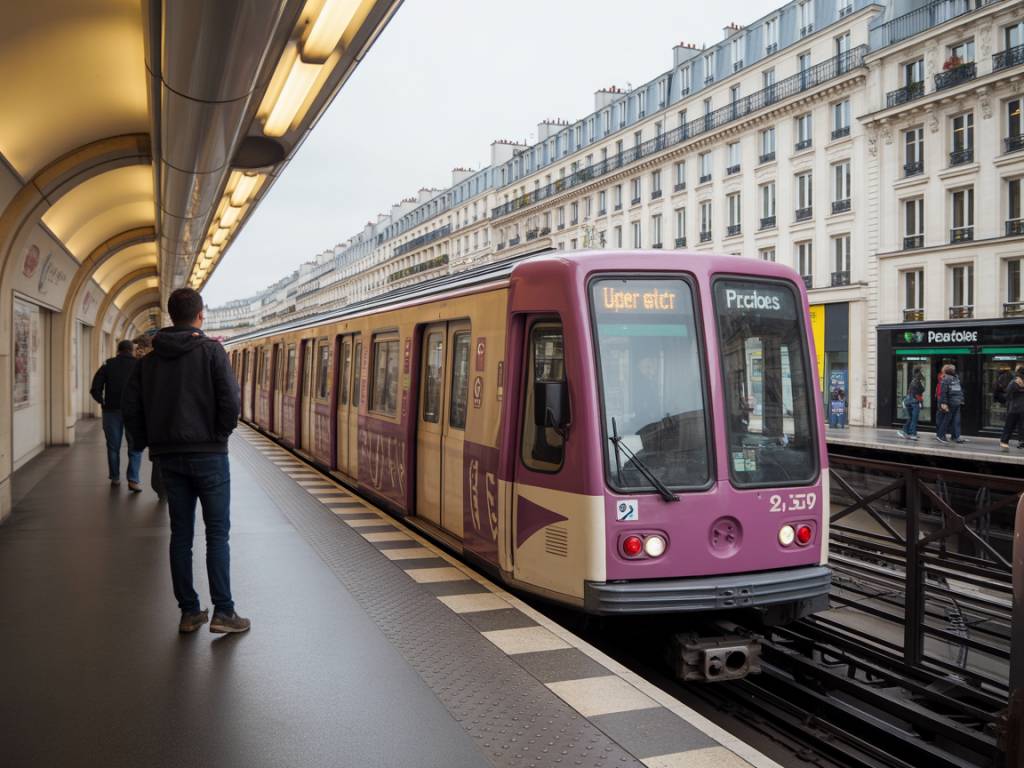
Landing in Paris for the first time and staring at the metro map can be intimidating. Lines crossing everywhere, strange station names, and everyone around you seems to know exactly where they’re going. Don’t worry: once you understand a few basics, the Paris metro becomes your best ally – faster and cheaper than taxis, and usually more reliable than rideshares.
In this guide, I’ll walk you through how to use the Paris metro step by step, the way I explain it to friends visiting for the first time. Real travel times, concrete examples, and the tiny details that make all the difference when you’re jet‑lagged with a suitcase.
Why the metro is (usually) your best option in Paris
The Paris metro is not perfect, but for most visitors it ticks all the right boxes:
- Fast: In central Paris, expect 2–4 minutes between trains during the day. A trip from the Eiffel Tower (Trocadéro) to the Louvre (Palais Royal–Musée du Louvre) takes about 20–25 minutes door to door, including walking and connections.
- Affordable: A single ticket within Paris (zones 1–2) is around €2.15 at the time of writing. With passes, it can drop to well under €2 per ride.
- Predictable: No traffic jams, no surge pricing, and you always know roughly how long a ride will take.
- Dense network: You’re almost never more than a 5–7 minute walk from a station in central Paris.
Are there downsides? Yes: stairs, crowds at rush hour, and older infrastructure. If you have heavy luggage or mobility issues, you’ll need to plan a bit more carefully (I’ll get to that). But overall, for a first‑time visitor, mastering the metro is the most efficient way to move around.
Understanding the basics: lines, directions & zones
Let’s clear up the three things that confuse visitors the most.
1. Lines and colors
Each metro line has a number (1 to 14, plus a few Orlyval, RER letters, etc.) and a color. On maps, you’ll see:
- Metro lines: 1–14 (and some secondary lines like 3bis, 7bis)
- RER lines: A, B, C, D, E – these are suburban trains that cross the city and share some central stations with the metro
For most tourist stays inside Paris, you’ll mainly use metro lines and maybe one or two RER lines (especially A and B).
2. Direction is by terminus
In Paris, you never ask “Which way is east?” but “Which way is towards La Défense?”. Each platform is marked by the terminus station of the line in that direction.
Example: You’re at Châtelet and want to take line 1 to the Arc de Triomphe (station Charles de Gaulle – Étoile).
- Line 1 has two termini: La Défense and Château de Vincennes.
- The Arc de Triomphe stop is between Châtelet and La Défense.
- You follow the signs for Ligne 1 – Direction La Défense.
3. Zones (for tickets, not for navigation)
On the metro map, you’ll see fare zones from 1 to 5.
- Paris city proper = mostly zones 1–2.
- Airports = zone 4 (Orly) and 5 (CDG).
- Disneyland Paris = zone 5.
You don’t need zones to find your way around; they matter for choosing the right ticket or pass. More on that next.
Tickets, passes & the dreaded “which one should I buy?”
This is where most visitors lose time at the airport vending machines. Here’s a simple breakdown based on how long you’re staying and what you plan to do.
Single tickets: t+ ticket
- Valid on:
- Metro and RER within Paris (zones 1–2)
- Tram and buses within Paris
- Not valid for:
- Airport to city (CDG, Orly)
- Trips to Versailles, Disneyland, etc.
- Good if:
- You’re in Paris for 1–2 days and only plan 2–4 rides per day.
Tip from experience: Most people end up taking more rides than they expect, especially when feet start hurting around 4 pm. Don’t underestimate.
Passes: Navigo Easy, Navigo Découverte, and others
Navigo Easy (for short visits staying in Paris city):
- Reusable card you load with single tickets or day passes.
- Card costs a few euros once, then you load it with t+ tickets or bundles.
- Convenient if you don’t want paper tickets and you’re mostly staying within zones 1–2.
Navigo Semaine (week pass – “Navigo Découverte” card):
- Best value if you’re staying at least 4 full days including a Monday–Sunday stretch.
- Covers all zones if you choose that option: metro, RER, buses, trams, and even airport trains (RER B to CDG, Orlyval+RER etc., depending on current rules).
- Card costs a small extra fee and requires a tiny ID photo (you can cut one from a printout or use a cheap photo booth in large stations).
Typical scenario: I often recommend the week pass to friends staying 5–7 days who plan to visit Versailles or Disneyland and arrive between Monday and Wednesday. It usually pays for itself after a few days plus one airport transfer.
What about contactless payments (tap and go)?
Paris is gradually introducing contactless credit card validation on gates. Depending on when you visit, you might be able to tap your card or phone directly, especially on metro and RER within central Paris. It’s practical for short stays, but watch for:
- Daily caps and how many people are using the same card (each rider needs their own).
- Confusion when mixing paper tickets, passes and taps – pick one strategy and stick to it.
How to plan a metro journey without wasting time
You have three main tools: apps, official maps, and station signage.
1. Use a reliable app
For visitors, I recommend:
- Bonjour RATP (official Paris transport app): real‑time info, disruptions, routes.
- Google Maps or Citymapper: simple to use, good walking directions between stations.
Always check the departure time and walking time to/from the station. A 20‑minute journey in the app can easily become 30 minutes once you count getting lost in Châtelet’s corridors or stopping for a croissant.
2. Keep a paper or offline map
Almost every station has free pocket maps by the ticket machines. I still pick them up because:
- Mobile signal can be weak in tunnels.
- It’s easier to see the whole network and plan alternatives.
3. Watch for alternative routes
If your app shows 3 changes for a 25‑minute ride, ask yourself: “Is a longer ride with fewer changes better?”
Example from my daily life: Going from Bastille to Montmartre (Abbesses):
- Fastest: 2 changes, 22 minutes. Involves long corridors at Châtelet.
- Alternative: 1 change, 28–30 minutes. Much more straightforward and less walking underground.
If you’re tired or with kids, the second option is usually the smarter one.
At the station: what actually happens, step by step
Here’s the typical sequence from street to train, with the small details newcomers often miss.
1. Finding the entrance
Look for the green M or the classic Art Nouveau signs saying “Métro”. Some big squares (like République, Bastille, Nation) have several entrances around the square – it can save you 5 minutes to choose the one closest to your direction.
2. Buying or validating your ticket
- Use the automatic machines. They have English and are less stressful than a queue at the counter.
- Keep your ticket or pass handy – you need it to pass the gates, and sometimes at exits on RER lines.
- Insert (or tap) once per trip; do not reuse or share a single ticket for multiple people.
3. Navigating to the right platform
After the gates, follow the colored signs for your line, then the direction by terminus.
At big interchange stations like Châtelet – Les Halles or Gare du Nord, expect:
- Long corridors (3–8 minutes walking between lines)
- Stairs and sometimes escalators, not always working
- Signs for multiple lines in the same direction – check the line number and terminus every time
4. On the platform
- Check the overhead display: next train in X minutes, terminus displayed.
- Stand beside the doors, not in front of them. Let people off first.
- Keep bags closed and in front of you when the train arrives – this is where pickpockets like to work in crowded stations.
5. On the train
Announcements will be in French, but stations are clearly displayed inside the train. On newer lines (1 and 14), there are lighted maps that show progress between stations.
If you’re unsure, don’t hesitate to ask quietly: “Does this train stop at…?” Most Parisians will answer briefly but helpfully.
Peak hours, safety & what feels comfortable in real life
When to avoid the metro if you can
- Weekdays 8:00–9:30 am: Commuter crush, especially on lines 1, 4, 9, 13, 14 and RER A/B.
- Weekdays 17:30–19:30: Evening rush. You may have to wait for a second or third train on very crowded lines.
- Saturday evenings: Busy around big hubs and nightlife areas (Bastille, Oberkampf, Pigalle, Champs‑Élysées).
If you’re visiting with small children, bulky strollers or big suitcases, try to travel slightly before or after these slots.
Is the metro safe?
Physically, yes – violent incidents are rare, especially on main tourist routes. The real risks are:
- Pickpockets: Common on crowded lines and around tourist hot spots (line 1, line 4, RER B from the airport).
- Bag snatching near doors just before they close.
Common‑sense tips I apply myself:
- Keep your phone out of the open near train doors, especially at above‑ground stations.
- Wear your backpack in front of you in crowded carriages.
- Avoid leaving your bag on an empty seat while you stand.
- Ignore people who try to distract you with petitions, “found” rings, or dramatic stories, especially around major stations.
One small anecdote: a visitor once told me proudly he had a “secret money belt” under his T‑shirt. Then he lifted his shirt in the metro to show it to me… with three strangers watching. Don’t do that. Keep valuables discreet and don’t advertise where they are.
Accessibility, luggage & strollers: what you need to know
This is where the Paris metro shows its age. Many stations were built long before accessibility was a concern.
Escalators and lifts
- Only a limited number of stations have elevators (often big hubs or newer lines).
- Escalators are common but not guaranteed, and they break down regularly.
- Lines 1 and 14 are generally more modern and slightly easier with luggage.
If you have reduced mobility, check the RATP website or app for stations with accessible exits. You may rely more on buses, which are low‑floor and wheelchair‑accessible.
Travelling with suitcases
- Try to avoid changing lines more than once; each change usually means more stairs.
- Avoid the biggest interchange stations (Châtelet, Saint‑Lazare, Montparnasse) with heavy luggage if you can. The walking inside can easily take 10–15 minutes.
- Consider using the RER or airport buses instead of a pure metro route for airport transfers.
With strollers
Locals do it, but it’s not always easy. If you’re two adults, it’s manageable: one in front, one behind on the stairs. If you’re alone with a stroller, buses are usually more comfortable.
Metro etiquette: how not to annoy everyone (and enjoy the ride)
Parisian commuters can seem grumpy, but metro etiquette is simple once you know the unwritten rules:
- Stand on the right on escalators, walk on the left. Blocking the whole width with suitcases is the quickest way to generate sighs behind you.
- Let people get off before you get on. It’s not just polite; it makes boarding faster for everyone.
- Don’t sit in the folding seats near doors during rush hour – they’re meant to be folded up when it’s crowded.
- Keep your voice down. Loud phone calls or speakers on without headphones are badly seen.
- Move inside the carriage rather than staying glued to the doors once you’re on.
Do Parisians follow all these rules perfectly? Of course not. But you’ll already be ahead of the curve.
Typical metro trips for first‑time visitors (with real timings)
To help you get a feel for real travel times, here are a few common tourist routes, counted from entrance to exit, including walking and a normal level of “I look at signs twice because I don’t live here”.
Eiffel Tower (Trocadéro) → Louvre Museum (Palais Royal – Musée du Louvre)
- Route: Line 9 (Trocadéro → Franklin D. Roosevelt), then line 1 (Franklin D. Roosevelt → Palais Royal).
- Time: Around 20–25 minutes total.
- Tip: If you want fewer changes but don’t mind a bit more walking, you can also get off at Tuileries or Concorde and walk through the gardens.
Montmartre (Abbesses) → Notre‑Dame (Cité)
- Route: Line 12 (Abbesses → Concorde), then line 1 (Concorde → Châtelet) and a short walk underground, then line 4 (Châtelet → Cité).
- Time: 25–30 minutes, depending on your walking speed in tunnels.
- Alternative: Get off at Hôtel de Ville (line 1), walk across the river to Notre‑Dame in about 10 minutes, and skip changing to line 4.
Gare du Nord → Latin Quarter (Odéon)
- Route: Line 4 (Gare du Nord → Odéon, direct).
- Time: 15–20 minutes, depending on waiting time.
- Tip: If it’s rush hour and line 4 is packed, you can also take line 5 to Bastille then line 10 to Odéon, but it’s longer and involves more stairs.
CDG Airport → Central Paris (Châtelet – Les Halles)
- Route: RER B (CDG → Châtelet – Les Halles).
- Time: Around 35–40 minutes of train time, plus 5–15 minutes depending on how quickly you find the platform.
- Warning: Watch your belongings closely on this route – it’s a favourite for pickpockets targeting tired visitors with luggage.
Night time, strikes & “what if it doesn’t go as planned?”
Metro operating hours
- From around 5:30 am to about 00:30–1:15 am, depending on the day and line.
- On Friday and Saturday nights, some lines run slightly later.
If you leave a late dinner at 11:45 pm, don’t assume you can get anywhere in the city – you might catch the last metro for one direction but not your full connection. Always check your last train on the app before ordering a final dessert or drink.
What about strikes?
They do happen. The good news is:
- You’re usually warned a few days ahead.
- Minimum service is often maintained on major lines.
On strike days:
- Plan more time for each trip.
- Avoid unnecessary changes, stick to lines with “trafic normal” or “trafic quasi normal”.
- Consider walking 1–2 stations if distances are short – in central Paris, many stops are only 7–10 minutes apart on foot.
Common mistakes first‑time visitors make (and how to avoid them)
- Buying tickets one by one at each trip.
Solution: Estimate your daily rides and consider a pass or loading several tickets at once on a Navigo Easy. - Throwing away the ticket after entering.
Solution: Keep it until you exit the system. On RER trains, inspectors may check it onboard or at exits. - Getting off too early at a station with a familiar name.
Example: Getting off at “Saint‑Michel” instead of “Saint‑Michel – Notre‑Dame” on RER, or mixing up stations with similar names.
Solution: Always check the full station name, not just the first word. - Standing still right after the gate.
Solution: Move a couple of meters forward before checking your phone or bag, so people behind you can pass. - Panicking about a missed stop.
Solution: Stay calm, get off at the next station, cross to the opposite platform, and go back one stop. In central Paris, stations are often less than 2 minutes apart.
If you keep these in mind and accept that you might take a wrong turn once or twice, the metro will quickly feel familiar. After a day or two, you’ll be changing lines at Châtelet like you’ve been doing it all your life – or at least looking like you do.