


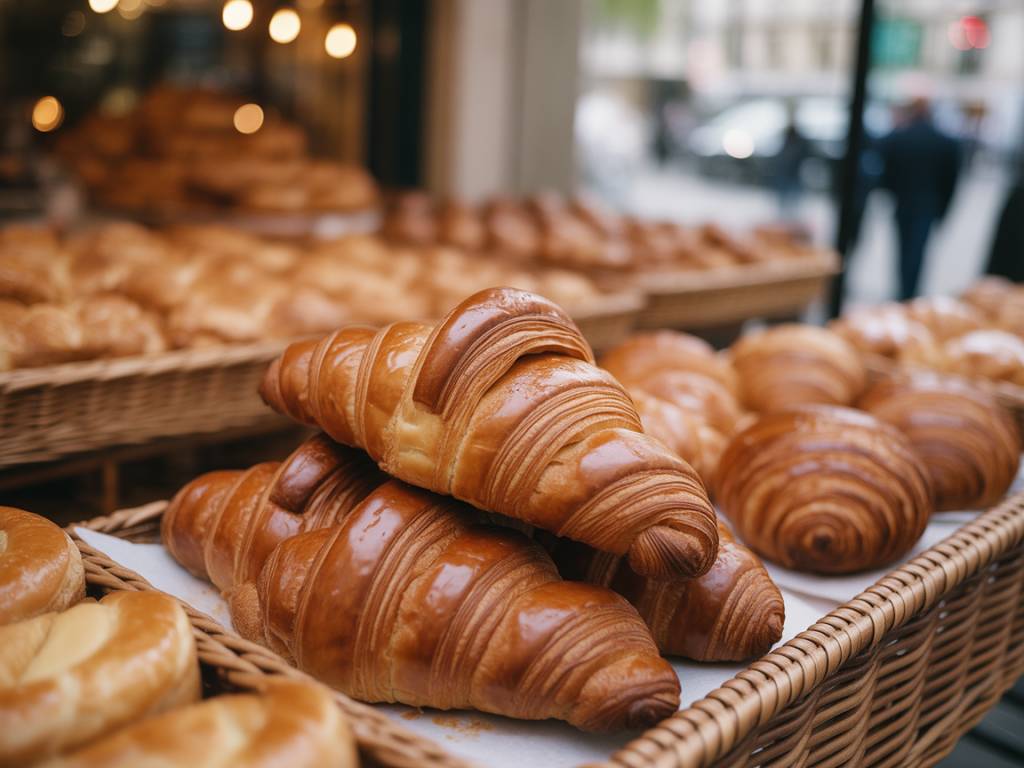
If you ask ten Parisians where to find the best croissant in the city, you’ll get at least fifteen different answers… and not one of them will be “the café right under the Eiffel Tower”.
Parisians are loyal to their neighborhood boulangerie. We don’t cross the entire city every morning for a croissant, but we do keep a mental map of “good spots” in other districts. The trick, as a visitor, is to mix both: a great bakery near your accommodation, and one or two “destination” addresses worth a metro ride.
In this guide, I’ll walk you through how locals really eat viennoiseries (croissants, pains au chocolat, chaussons aux pommes…), what to look for, what to avoid, and a selection of tried-and-tested bakeries across different neighborhoods — including what time to go, how much to budget, and how long you’ll likely wait.
How Parisians actually eat croissants
First, set your expectations: a croissant is not a full brunch. It’s a quick, cheap, everyday pleasure. Here’s how it usually looks in real life:
- Weekdays: People grab one croissant or pain au chocolat on the way to work, and eat it with a coffee at the office or on a café terrace. Time spent: 5–15 minutes, max.
- Weekends: More relaxed. Families send someone “downstairs” to buy a bag of warm viennoiseries and a baguette. Expect queues at good bakeries from 9:30 to 11:00.
- Afternoon snack: School kids come out at 16:30 with a “goûter” — often a pain au chocolat or a chouquette bag. Some adults quietly copy them.
So if you want to “eat like a local”, think simple: one or two pastries, a coffee, maybe some fresh orange juice. Total budget: generally under 7–8 € per person if you avoid the most touristy café terraces.
What makes a genuinely good croissant
Before giving you addresses, a quick checklist to spot quality, even in a random street:
- Smell: A good boulangerie smells of butter and bread, not reheated fat. If the smell is faint or “industrial”, that’s often a bad sign.
- Appearance: Croissants should be a deep golden color, not pale beige, and not burnt dark brown. The shape is a bit curved, not huge and bloated.
- Texture: When you tear it, you should see thin, layered honeycomb structure inside, not a dense wad of dough. The exterior is crisp but not hard.
- Butter: You taste butter, not sugar. If your fingers are drowning in grease, it’s not necessarily a good sign — excess fat often hides poor dough.
- Turnover: Look at the tray behind the counter. Is it full of just-baked pieces constantly moving, or a sad row of lonely croissants at 11:30? High turnover generally equals freshness.
One more thing: a sign with “Boulanger – Artisan” is better than “Boulangerie – Pâtisserie” that sells everything under the sun. It’s not a rule, but many of the best places focus more on bread and viennoiseries than on fancy cakes.
Tourist traps to avoid (even if the terrace looks pretty)
There are cafés around the Louvre, the Champs-Élysées, or near major monuments that charge 3–4 € for a mediocre industrial croissant. The croissant arrived at the café frozen, baked on site, and sold as “homemade”. A clue: the same identical shape and size in three different cafés on the same street.
If:
- all the pastries look perfectly identical and very shiny
- there’s a huge breakfast menu in English with “American Breakfast” and pancakes photos everywhere
- the coffee is 5–7 €…
…then you’re more in a tourist canteen than a real Parisian spot. That doesn’t mean you can’t enjoy it, but if you’re serious about viennoiseries, you can do much better for less.
Best areas vs. best addresses
Lorem ipsum aside, there are no “croissant districts” in Paris. You have excellent bakeries in “posh” areas and very average ones in trendy streets. What matters is the individual shop.
That said, there are neighborhoods where the density of good spots is higher:
- South Pigalle / Ninth arrondissement: Trendy but still local, with several very solid artisan bakeries.
- Upper Marais / Temple area: Lots of hipster coffee shops plus traditional bakeries.
- Eastern Paris (11th, 12th, 20th): Where many young bakers set up shop, with more local clientele than tourists.
Below, I’ll mix “destination” bakeries you might plan a stop around, and more “everyday” options that are excellent if you’re already nearby.
Classic Parisian croissants: where to go
These addresses are widely loved by locals and serious pastry fans. They are not secrets, but they’re still used by everyday Parisians, not just Instagrammers.
1. Du Pain et des Idées – Canal Saint-Martin / 10th
This small corner bakery near Canal Saint-Martin has become a pilgrimage spot, but it still delivers. I live 15 minutes’ walk away, and I still go once or twice a month for a “pain au chocolat” or an escargot (spiral pastry).
- What to try: The classic croissant is excellent, but the “pain au chocolat” and the “escargot pistache – chocolat” are the real stars.
- Price range: Around 1.50–2.50 € for viennoiseries.
- Best time to go: Early morning (8:00–9:30) on weekdays. After 10:30, queues grow. Weekends can be very busy.
- Local tip: Grab your pastry to go and sit along Canal Saint-Martin (five minutes away). There’s no seating inside.
2. La Pâtisserie des Rêves… is gone, but its spirit lives elsewhere
Many older guides still list La Pâtisserie des Rêves, but most of their boutiques have closed. Don’t waste your time hunting for it. Instead, focus on current stars like Septime bakery spin-offs, or neighborhood artisans below.
3. Blé Sucré – Square Trousseau / 12th
Hidden just off Square Trousseau, Blé Sucré is famous among pastry fans for its perfectly glazed madeleines, but the croissants and pains au chocolat hold their own.
- What to try: Croissant, pain au chocolat, and a bag of madeleines “pour plus tard”.
- Price range: Around 1.40–2.50 €.
- Best time to go: Weekdays before 9:30 or after 11:00. The small terrace fills up quickly.
- What to do nearby: Walk through the Marché d’Aligre (10 minutes away) for a very local food market experience.
4. Pierre Hermé – multiple locations
Pierre Hermé is more known for elaborate pastries and macarons, but their “viennoiseries de luxe” are interesting if you like creative twists.
- What to try: The Ispahan croissant (rose, lychee, raspberry) is rich and more like a dessert. Not for every morning, but worth trying once.
- Price range: 2.50–5 € per piece — this is pastry as “art object”.
- Tip: Use this as a special treat rather than your everyday croissant stop.
Neighborhood favorites: good and still local
Here are places where you’re more likely to stand in line behind people buying ten croissants “pour la famille” than behind a group with selfie sticks.
5. Tout Autour du Pain – Marais / 3rd
Small, unpretentious, and directly on the route many locals take to work, this bakery has won several awards without turning into a circus.
- What to try: Plain croissant, pain aux raisins (raisin swirl), and if you see them: chouquettes (small sugar-topped puffs).
- Price range: Around 1.20–2.20 €.
- Best time: Morning between 8:00 and 10:00. Later, choice can be more limited.
- Nearby: You’re a short walk from the Musée Picasso and Place des Vosges.
6. Boulangerie Utopie – Oberkampf / 11th
Run by young bakers, Utopie is loved by the neighborhood and often cited in “best bakery” lists. On weekends, the queue goes out the door, but it moves fast.
- What to try: Charcoal baguette (if you’re curious), but especially their flaky pastries and seasonal creations.
- Price range: 1.30–3 €.
- Best time: Weekday mornings; Saturday late morning can be hectic but fun if you don’t mind waiting 10–15 minutes.
- Tip: If the main shop is full, check if they open a second counter next door for faster service.
7. Farine & O – Sainte-Marthe / 10th
On a calm little square that tourists often miss, Farine & O serves superb croissants and pastries in a more relaxed atmosphere than the big names.
- What to try: Butter croissant, kouign-amann (if you want something extra buttery and caramelized).
- Price: About 1.30–2.50 €.
- Best time: Morning between 8:00–10:00; the square is quiet and pleasant for a quick break.
- Nearby: Walk 10–15 minutes to Canal Saint-Martin afterwards.
If you’re staying near major attractions
If your hotel or apartment is around big sights, here are some options that are genuinely good and not just “OK for tourists”.
Near the Eiffel Tower (7th arrondissement)
- Boulangerie du Champ de Mars (Avenue de la Bourdonnais): Good neighborhood bakery with solid croissants and baguettes. Expect lots of tourists mixed with locals.
- Best strategy: Buy your pastries to go and have a picnic breakfast on the Champ de Mars rather than paying for an overpriced, mediocre “petit déjeuner” in a tourist café.
Near the Louvre / Palais Royal
- Eric Kayser – multiple branches: This is a chain, but a good one. Quality is consistent, and some locations are close to the Louvre without feeling like a trap.
- What to try: Croissant and “tarte aux pommes” (apple tart) if you want something more filling.
Near Notre-Dame & the Latin Quarter
- La Maison d’Isabelle (5th arrondissement): Known for its award-winning croissant au beurre, with queues that are mostly locals and students.
- Best time: Any time from 7:00–10:00 for fresh batches; from 11:00, some items start to vanish.
How to order like a Parisian
Even if you don’t speak French, a few simple phrases will make the experience smoother — and you’ll avoid ending up with three extra pastries you didn’t mean to order.
- “Bonjour” when you enter. Skipping this is the fastest way to get a cold vibe.
- “Un croissant au beurre, s’il vous plaît.” (Butter croissant — the classic.)
- “Un pain au chocolat, s’il vous plaît.” (Chocolate-filled pastry.)
- “C’est tout, merci.” (That’s all, thanks.)
- “Sur place ou à emporter ?” means “For here or to go?” — answer with “Sur place” or “À emporter”.
Many bakeries in Paris have little or no seating. If you don’t see tables, assume it’s takeaway only and plan a nearby bench, square or café where you can sit.
What does a “real” croissant breakfast cost?
Here’s a realistic budget for two people in 2025, avoiding both the cheapest industrial options and the luxury spots:
- In a bakery, takeaway:
- 2 croissants: 2.60–4 € total
- 2 coffees from a nearby café counter (standing): 3–5 € total
- Total: 6–9 € for two, if you don’t need to sit down at a table.
- In a café, seated breakfast:
- Formula “petit déjeuner” (hot drink + juice + croissant/bread): 7–12 € per person, depending on the area.
- Quality varies a lot; ask if the pastries are from an artisan bakery or frozen.
My own routine when I stay in another part of town: bakery croissant + takeaway coffee. I sit on a bench or on the edge of a fountain and watch the city wake up. Cheaper, better, and much more Parisian than a 18 € “hotel breakfast buffet”.
For pastry lovers beyond croissants
If you already know you love croissants and pains au chocolat, you might want to explore a bit further:
- Chausson aux pommes: Puff pastry filled with apple compote. Look for versions where you see real apple, not neon-yellow jelly.
- Kouign-amann: A Breton specialty, very buttery, caramelized, compact and addictive. Utopie and Farine & O often do good versions.
- Escargots: Spiral pastries with filling (pistachio, chocolate, raisins…). Not an actual snail, don’t worry.
- Brioche feuilletée: Like a mix between brioche and croissant, very flaky. Some modern bakeries specialize in this.
If you’re heading to a park for a picnic, mix a few of these in a bag rather than buying a big cake. Easier to share, and very representative of what Parisians actually eat.
Gluten-free and special diets
Traditional croissants rely heavily on wheat flour and butter. If you’re gluten-intolerant or vegan, your options narrow, but they do exist.
- Gluten-free: Look for dedicated gluten-free bakeries (in the 9th, 10th, and 11th, several specialized spots change regularly). The texture is different, more dense, but the better places work hard on flavor.
- Vegan: A couple of modern bakeries offer vegan croissant-style pastries made with plant-based fats. Ask directly: “Vous avez des viennoiseries véganes ?”.
Be cautious with random “sans gluten” labels in very touristy areas; sometimes it just means “we can serve you a pre-packaged product”, not a decent bakery item.
Practical itineraries for pastry-focused mornings
If you want to organize your sightseeing around good croissants (a very respectable life choice), here are two simple morning plans.
Canal Saint-Martin & 10th arrondissement
- Start around 8:30 at Du Pain et des Idées for a croissant or escargot.
- Walk 5–10 minutes to Canal Saint-Martin, sit by the water and watch deliveries and commuters go by.
- Stroll along the canal towards République, then head down to Oberkampf.
- A late-morning second stop at Boulangerie Utopie around 10:30–11:00 for a different pastry and maybe bread for lunch.
Marais & Right Bank classics
- Begin at Tout Autour du Pain around 8:30–9:00; grab a croissant and coffee.
- Walk through the quiet streets of the upper Marais towards Place des Vosges.
- Visit Musée Picasso or simply wander the courtyards and small squares.
- Later in the morning, if you have a sweet tooth, a metro or bus ride takes you to Blé Sucré in the 12th for madeleines and a second round of pastries.
Both itineraries stay well under 15 € per person in pastries and coffee, and keep you away from the worst crowds while still staying central.
Final tips to enjoy viennoiseries “like a true Parisian”
- Don’t over-plan. Pick one or two “must-try” bakeries, then be flexible. If there’s a 30-minute queue, your time in Paris is probably better spent elsewhere.
- Trust your nose and your eyes: a good smell, golden pastries, and a line of locals are better indicators than any “Top 10” list.
- Go early. Between 7:30 and 9:30, you get the city, and the croissants, at their best.
- Try at least one “simple” croissant and one more creative pastry to compare.
- Use parks and squares as your breakfast room: Canal Saint-Martin, Square Trousseau, Place des Vosges, or any small neighborhood square work perfectly.
If you treat viennoiseries as a daily ritual instead of a one-time “bucket list” item, you’ll leave Paris not just with good photos, but with a real sense of how the city tastes when it wakes up.